 Jack Russell
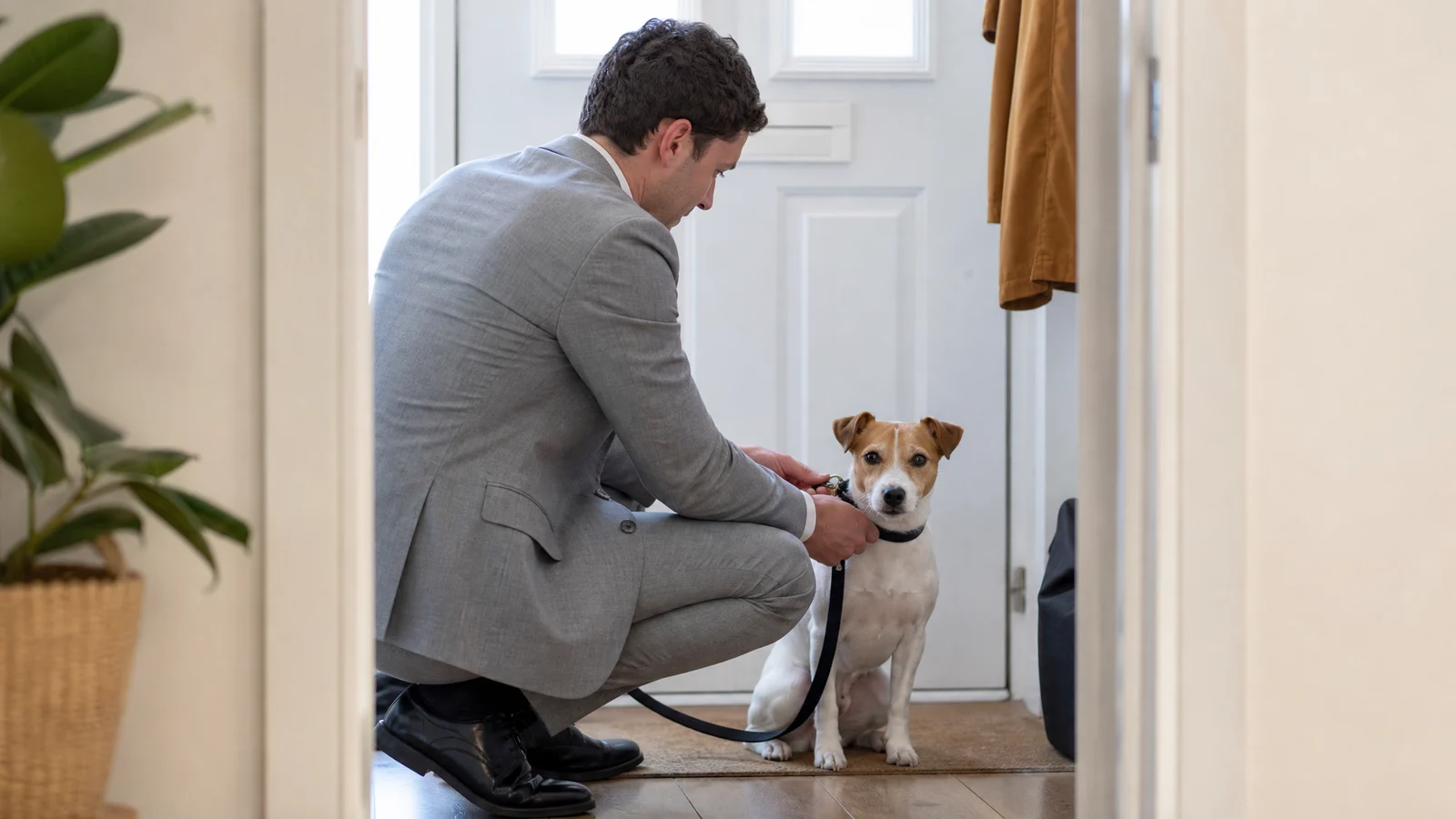
The common apartment mistake is waiting for limited floor space to make a Jack Russell Terrier calm. A small home can reduce running room, but it does not organize the dog's day. Without a predictable route from activity to recovery, door sounds, hallway traffic and evening rest can all become invitations to stay busy.
A workable routine uses three connected loops: outdoor movement, indoor thinking and quiet practice. This guide shows how to hand the dog from one loop to the next during morning, midday and evening. The goal is not constant entertainment. It is a day in which useful activity has a clear beginning, calm behavior has value and neighbors are not asked to absorb the gaps.
Build Three Loops Into Apartment Training
The three loops solve different parts of apartment life. Movement gives the dog a safe way to explore outside. Thinking work turns food and training into purposeful engagement, while quiet practice teaches what to do when nothing interesting is happening.
Loop One Is Outdoor Movement
Use a leash and choose routes where the dog can move without repeatedly meeting traffic at close range. Let sniffing be part of the outing, then add a few rewarded turns toward you. The walk should create shared movement instead of becoming a contest over speed.
Outdoor time does not have to look identical each day. A familiar route may support loose-leash practice, while a quieter route may allow more investigation. Match the choice to the dog's ability to respond and return home without carrying frantic energy through the lobby.
Loop Two Is Indoor Purpose
Indoor work can use part of a meal, a familiar toy or several easy cues. Hide food in obvious safe locations, practice a hand target between rooms or ask the dog to find a toy they already know. The task should be understandable enough that effort leads to success.
PDSA exercise guidance recommends making training part of the daily schedule to engage the mind and strengthen cues. That makes a short training job useful in an apartment. It adds purpose without asking the dog to race across a small room.
Loop Three Is Quiet Practice
Quiet is a behavior to notice and reward, not an empty period that appears after enough activity. Place a mat away from the front door and mark voluntary choices such as lying down, resting the chin or watching a sound without rushing toward it.
Battersea barking advice recommends rewarding dogs when they are naturally quiet and calm. Keep small rewards available before trouble starts. A dog who learns that stillness works has an apartment job even during ordinary household downtime.
The Morning Apartment Training Loop
Morning sets the rhythm because sleep, household movement and the first outdoor trip arrive close together. Prepare the leash and rewards before opening the apartment door. A smooth departure prevents the hallway from becoming the day's first burst of uncontrolled excitement.
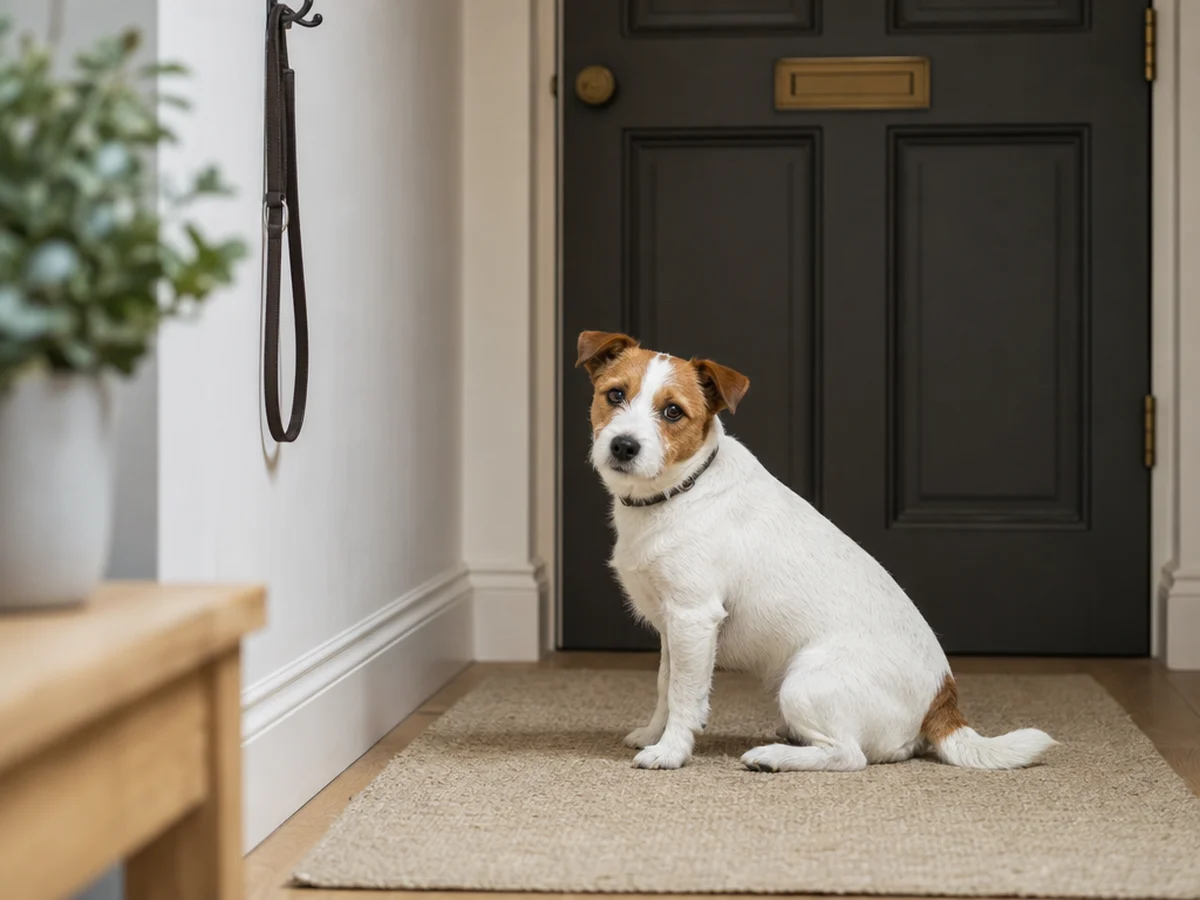
Leave the Apartment With a Plan
Ask for one easy behavior several feet from the door, then reward and approach. If the dog surges when the latch moves, close it gently and reset farther back. The lesson is that calm participation makes the route open, not that waiting at the threshold is a punishment.
Listen before entering a narrow hallway or elevator. If another dog or a busy group is close, wait inside and scatter a few rewards away from the door. Management keeps an accidental close meeting from undoing the quiet start you are building.
Move, Sniff and Reconnect Outside
Begin with enough walking and sniffing for the dog to settle into the outing. Then reward a name response, a hand target or a change of direction. These brief check-ins keep communication alive without interrupting every investigation.
Return while the dog can still walk through shared spaces thoughtfully. If coming home always happens after arousal peaks, the lobby and hallway become harder each day. A calmer return gives the indoor loop a fair starting point.
Trade Motion for Breakfast Work
Use part of breakfast for a simple search or several known cues after the dog has had water and a moment to settle. Keep the work low to the floor and away from furniture edges. Indoor purpose should slow the transition rather than create another round of leaping and grabbing.
Finish with food placed on the mat, then reduce your involvement. The sequence becomes outside movement, a solvable indoor job and rest. Repeating that order helps the dog predict that morning activity has an end.
Jack Russell Terrier Midday Apartment Training
Midday needs a handoff, not an attempt to repeat the whole morning. The useful question is which loop is missing. A dog who has slept may need movement, while a dog who has been watching hallway traffic may need a quiet reset before going outside.
| What you observe | Start with | Follow with |
|---|---|---|
| Rested body and easy attention | Outdoor movement | A short food search |
| Scanning near the door | Mat rewards | A quiet outdoor route |
| Busy pacing after an outing | An easy thinking job | Quiet practice |
| Difficulty taking food | Less stimulation | Comfortable recovery |
Make Departures Ordinary
When the dog will stay home, avoid turning departure into a long emotional event. Meet exercise, bathroom and comfort needs first, then offer a familiar safe activity and leave in a calm sequence. Practice very brief absences only at a level the dog can handle comfortably.
Do not assume barking during an absence is a training challenge you should ignore. Record the pattern if you can and look for signs of distress. When the dog cannot remain comfortable, we recommend a reward-based behavior professional who can assess the departure pattern. A veterinarian can assess a sudden change.
Keep arrivals as orderly as departures. Enter quietly, secure the door and wait for four paws on the floor before greeting. Then take the dog outside if needed and resume the next loop, rather than using an excited reunion as the day's largest event.
Use Indoor Movement Carefully
Narrow hallways and slippery floors are poor places for frantic games. Choose controlled movement such as following a hand target around two pieces of furniture, stepping onto a mat or changing positions on cue. Keep turns broad and the surface secure.
For a wider activity menu, use the site's guide to Jack Russell Terrier exercise. Apartment movement is one component, not a replacement for appropriate outdoor activity. The indoor choice should fit the space without bothering neighbors below.
Room layout also changes the choice. In a studio, one mat can mark both training and recovery if the release cue is clear. In a larger apartment, place activity away from shared walls and keep calm stations near the places where people naturally sit.
The Evening Apartment Training Loop
Evening often combines stored energy, household attention and the busiest sounds in a building. Treat it as a sequence rather than one long play period. A deliberate order makes it easier to identify whether the dog needs movement, thought or help settling.
Choose the Main Evening Outlet
Take the longer outing when the dog can use it well, not automatically at the noisiest hour. A quieter walk with sniffing and rewarded check-ins may support recovery better than a crowded route. Observe the return home as closely as the outward trip.
If weather or building activity changes the plan, replace one part rather than trying to duplicate the outdoors inside. Use a food search, cue sequence or supervised chew for thinking work. Save fast indoor movement for a suitable space where footing, furniture and noise are controlled.
Rehearse Building Sounds Below the Bark
Work with sounds at an intensity where the dog can notice and still eat. When footsteps pass, mark a glance toward the sound and reward a turn back to you. If barking starts, increase distance from the door and make the next repetition easier.
Do not shout over barking or use startling devices. AVSAB training guidance supports reward-based methods and explains that structure does not require fear or pain. Clear routines and well-timed rewards provide the apartment rules.
Close the Day Predictably
Dim the activity before bedtime rather than stopping at the most exciting moment. Put toys away, offer water, take the final calm outdoor trip and return to the same resting area. Reward the first relaxed choices, then let the room become uneventful.
A bedtime routine can include a familiar mat, soft bedding and a quiet food activity the dog already uses safely. Avoid introducing a difficult puzzle when the aim is recovery. The final job should be easy enough to finish and leave behind.
Audit the Jack Russell Terrier Apartment Routine
Review the routine by its effects, not by how busy the calendar looks. Useful activity should improve the dog's ability to reconnect and recover. If every outlet produces more pacing, vocalizing or grabbing, reduce intensity and make the transition to quiet more explicit.
Look for a cluster of changes across ordinary days. One good evening is encouraging, but a repeatable pattern gives better guidance. Keep the loops flexible so health, weather and building traffic can change without making the whole routine collapse.
- The dog moves through the doorway and shared spaces with less rushing.
- They choose the mat without being directed after familiar activities.
- Hallway sounds produce shorter attention and faster recovery.
- Indoor jobs hold interest without frantic pawing or repeated barking.
- They can rest between planned activities instead of demanding the next one.
Ask for professional help when the dog cannot settle despite an appropriate routine, becomes distressed when alone, reacts strongly in shared spaces or shows a sudden behavior change. Keep regular vet visits on the calendar for health and comfort. Choose a reward-based trainer who can evaluate the actual rooms and transitions.
Revisit Jack Russell household behavior problems when counters, visitors or doors disrupt the loop. Work on that location separately, then return it to the routine. Solving the station is clearer than adding activity to the whole day.
Apartment success is not a silent dog who is exhausted at all times. They are a dog who has safe movement, understandable thinking work and a practiced route back to rest. Keep those three loops connected, and the daily routine becomes easier for the Jack Russell Terrier, the household and the people living nearby.
 BehaviorJack Russell Terrier Jumping High: Fences and Counters
 Exercise and jobsPutting a Jack Russell Terrier's Jumping to Work in Agility
 BehaviorWhat to Do When Your Jack Russell Terrier Digs Up the Yard