 Jack Russell
11 Jack Russell training topics
Every common Jack Russell challenge, with first steps and guides to read.
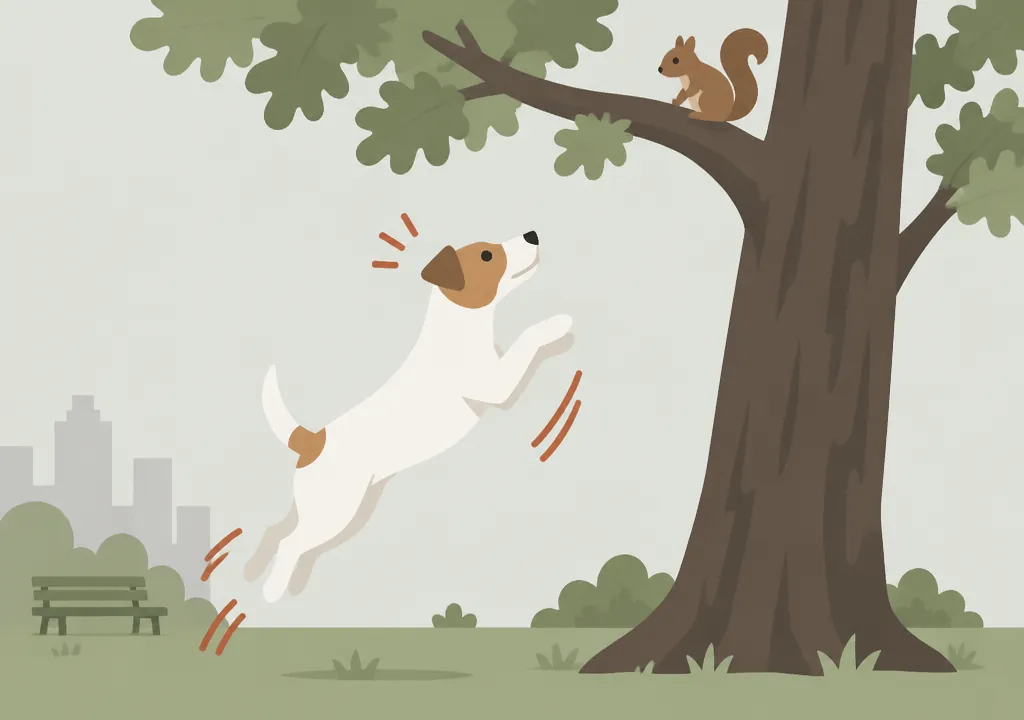
Chasing squirrels
Turn the chase into a game you control.
The squirrel chase is the drive behind the breed standard's words bold, active and alert, and the JRTCA warns that cats and small pets read as prey to a Jack Russell Terrier.
The full guide is honest about what training can and cannot do at home, so both animals relax.
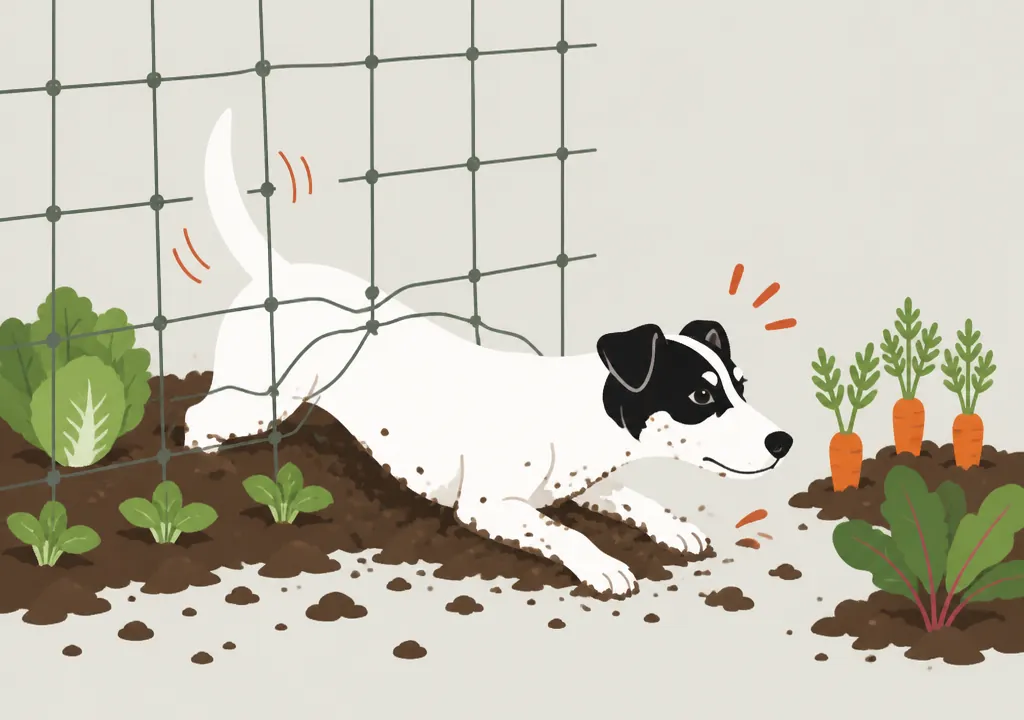
Digging and escaping
A dig spot and a secure yard.
Digging under the fence and vaulting over it share one lesson with jumping on visitors and counters. Getting higher or closer makes attention, food or access appear, and a Jack Russell learns that fast.
The full guide covers the jumping side, mapping door, counter and yard with one reward-based rule.
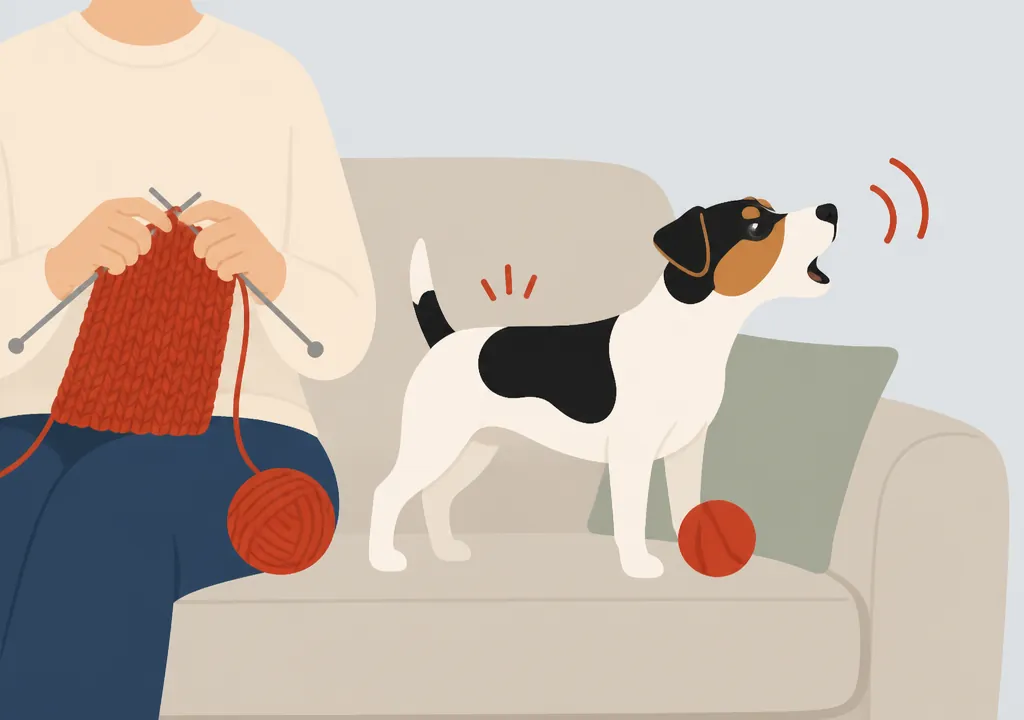
Barking for attention
Quiet ways to ask for play.
One terrier barks at you for play, another trots off after a leaf mid-cue, and both made the same decision. Something else pays better, and calling that stubborn teaches a bright Jack Russell Terrier to tune you out.
The full guide covers short sessions, a daily job, paying well and answering limit-testing.
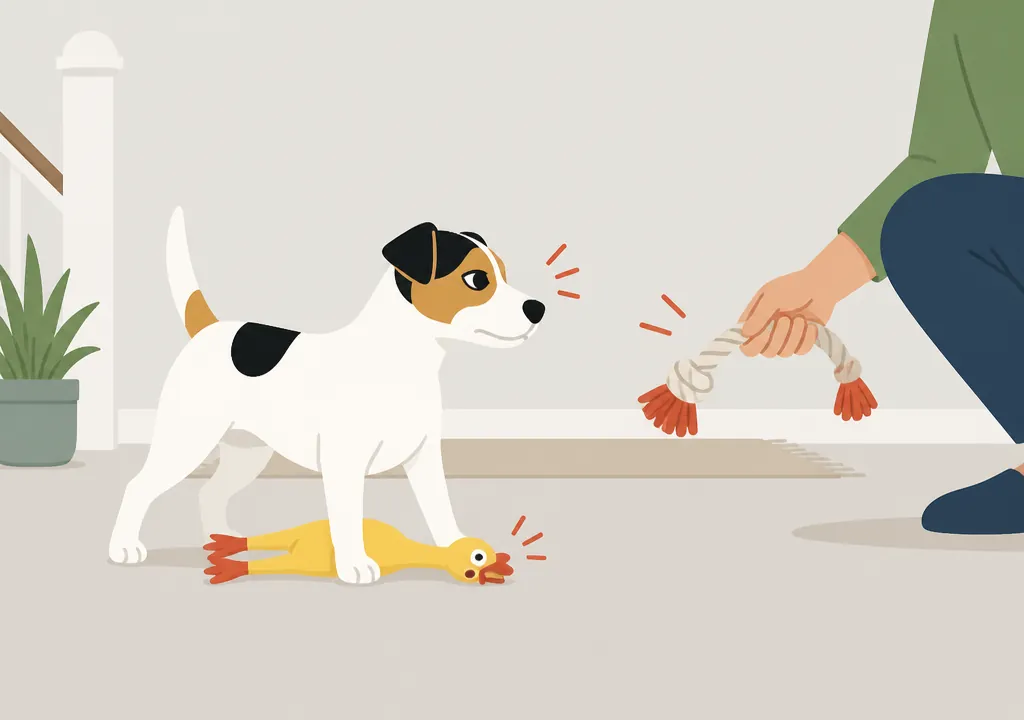
Guarding toys
Trade games instead of a stiff stare.
Stillness over a toy is not an invitation to a staring contest. In a Jack Russell Terrier, the pause, lowered head or fixed eyes may be the first visible sign that losing the object feels likely. Reaching closer at that moment can turn quiet concern into a growl, snap or bite.
Below, we use five movements instead of a generic trade ladder. We read the possession temperature, assign safe family roles, build returnable exchanges, change approach and found-object difficulty one variable at a time, and stop home practice when risk exceeds the cool-object lesson. The arrangement keeps family safety distinct from planned training, so a child or visitor never becomes part of a rehearsal.
Read the full guide: When a Jack Russell Terrier Freezes Over a Toy: Trade Games
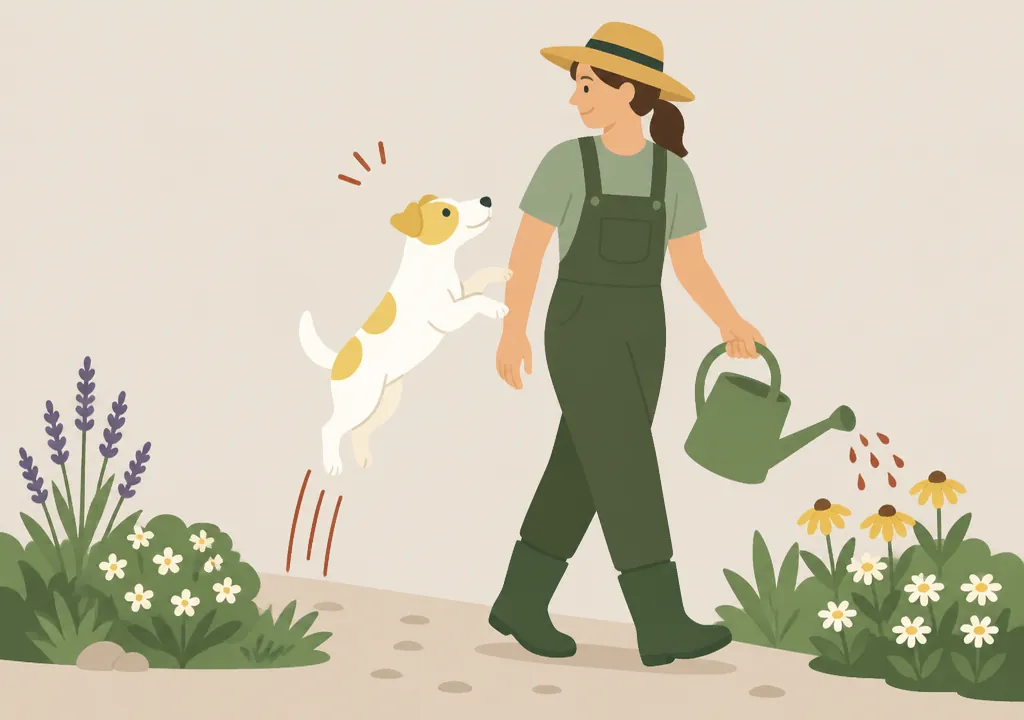
Jumping up
Four paws down, even for a small dog.
Jumping up is a Jack Russell's spring with no outlet. Breed profiles rate the Russell type 5 of 5 for energy and for needing a job, and hard jumping too early is bad for small joints.
The full guide puts that spring into agility, racing and a search game, not onto guests.
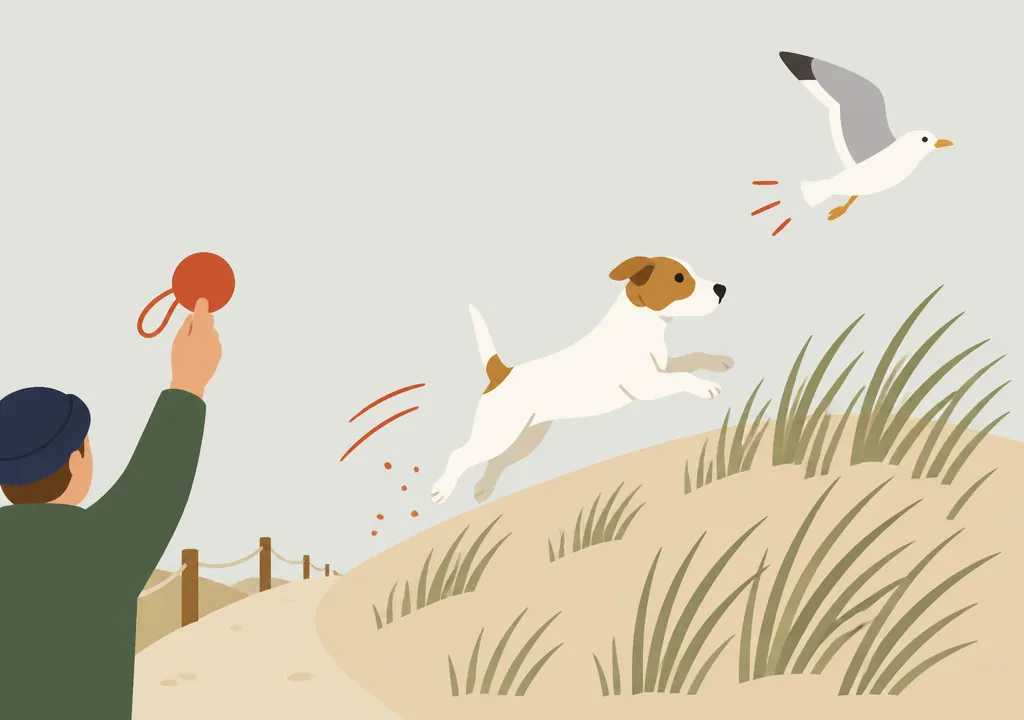
Running off
A recall that beats every scent.
Running off on a trail is rarely about the recall alone. Hiking asks a Jack Russell Terrier to pass people, handle movement and changing surfaces and keep checking in through a whole route.
The full guide starts with home rehearsals and the trailhead, then recall practice on ordinary routes.
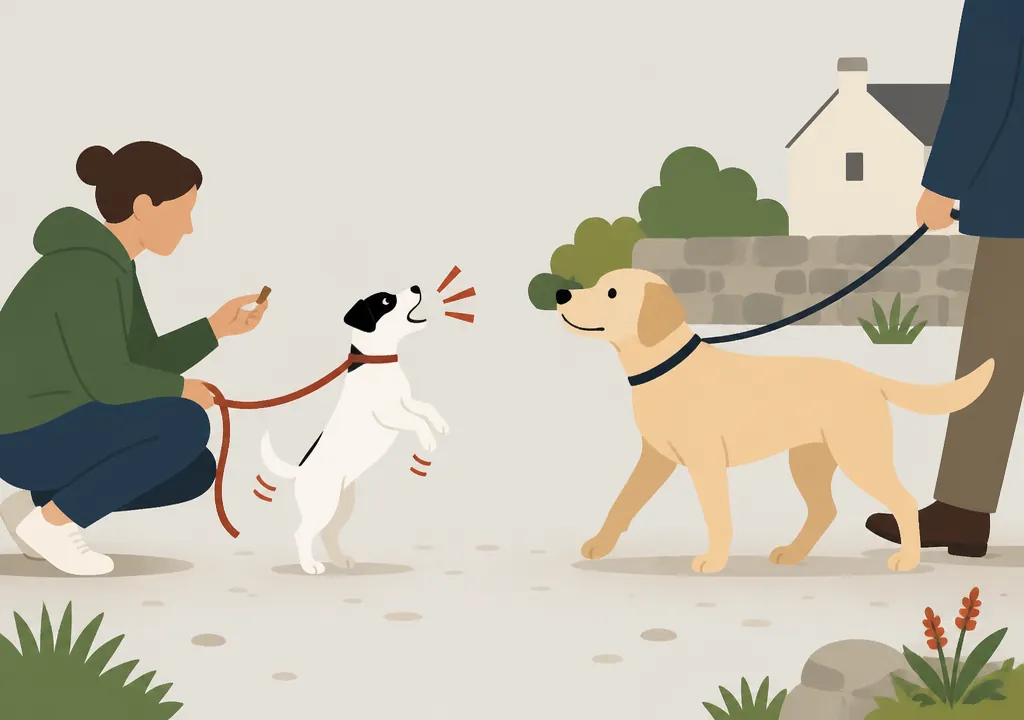
Bossy with other dogs
Calm, polite meetings on walks.
One Jack Russell Terrier barks when a dog appears but can turn away across the street. Another becomes still, stares and lunges when the gap closes. Both may be called aggressive, yet the second picture carries a different margin for error. A useful plan begins with the specific sequence, the available distance and the consequences of a mistake.
Below, we handle the encounter through five decisions rather than a generic socialization ladder. We set the risk margin, choose one of three exits, test calm movement without forcing greetings, manage the home and evidence record, and route bite risk or sudden behavior changes to qualified help. Each decision protects distance before it asks for a trained response.
Read the full guide: When a Jack Russell Terrier Picks Fights: Teaching Calm
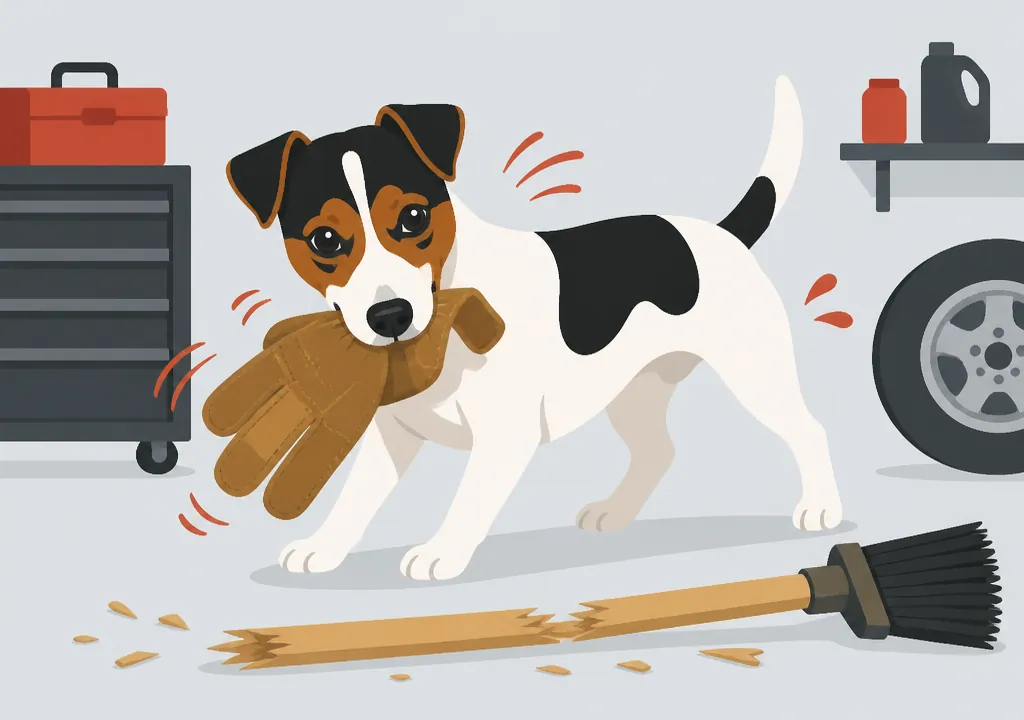
Destructive chewing
The right chews for strong jaws.
A torn cushion, a scored table leg and a chewed door frame look like one behavior problem from across the room. The evidence may tell three different stories. The cushion may follow an unsupervised burst of play, the table leg may appear during quiet evening chewing and the door frame may be damaged only when people leave.
Below, we work through five case files rather than assume every damaged object means boredom. We open the incident record, secure the room, run one controlled comparison, match legal materials to the evidence, and close the log only after dangerous chewing has been ruled out. The order keeps access and ingestion risk ahead of enrichment guesses.
Read the full guide: A Bored Jack Russell Terrier Invents Jobs, So Offer Chews
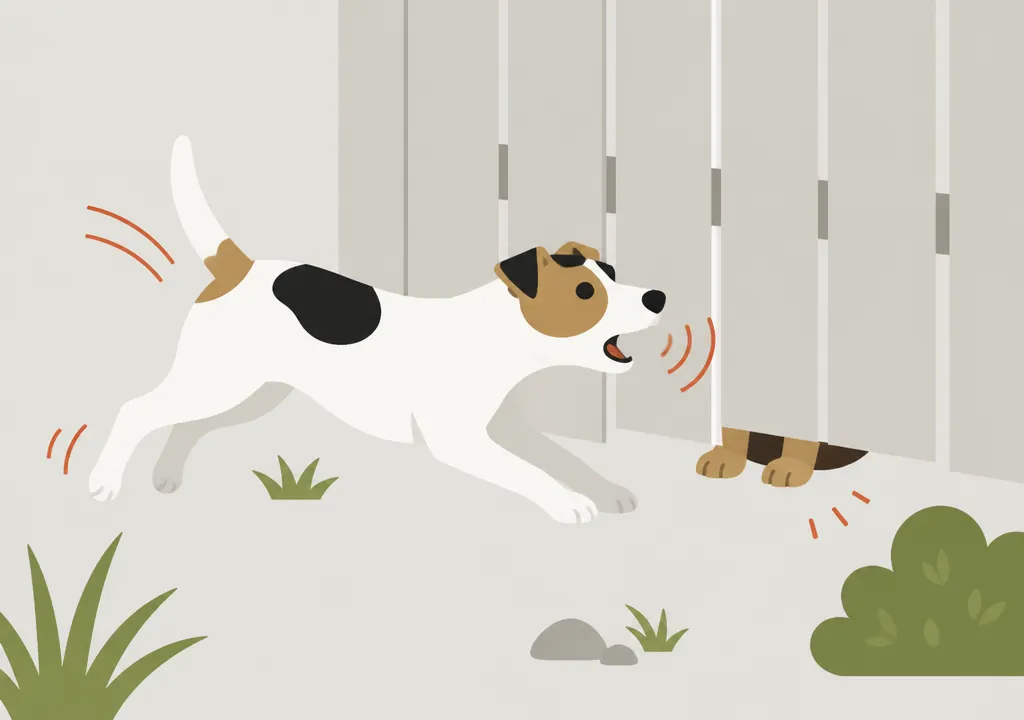
Barking at the fence
One alert, then back to play.
Some Jacks clear mice and rats from along the shed and leave a lawn that looks like it lost a fight with a backhoe. Others never touch the grass, and the gap is rarely about discipline.
The full guide is about the digging, prey drive and giving the instinct somewhere legal.
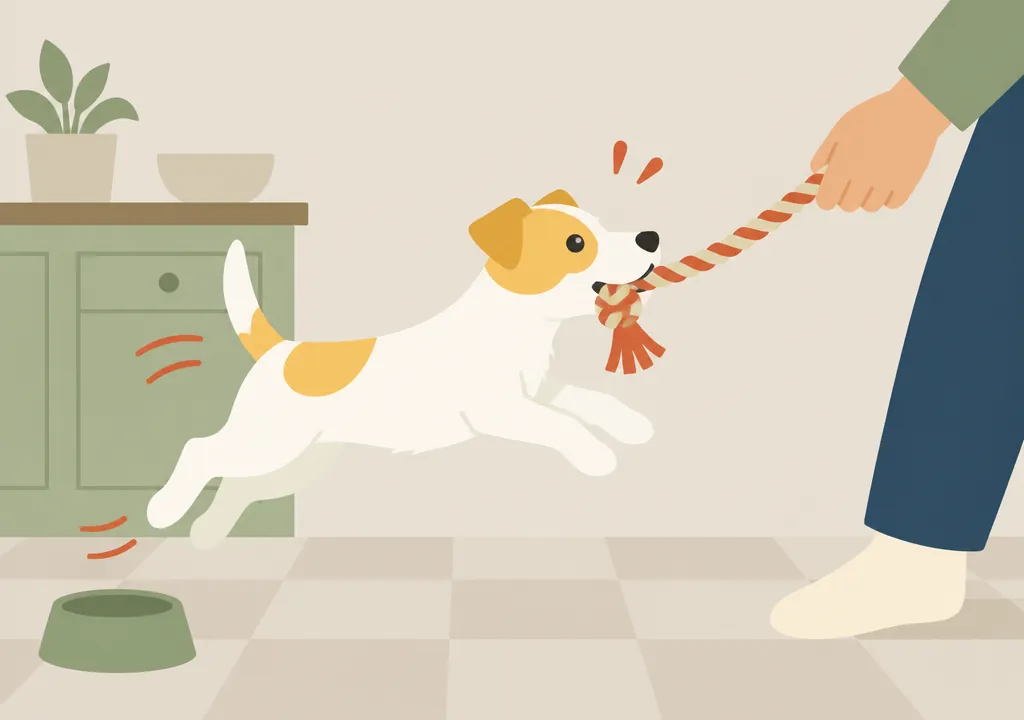
Puppy biting
Tug toys for terrier teeth.
A puppy grabs a sleeve, releases for a toy and keeps a loose wiggly body. Minutes later, the same game produces harder contact, frantic jumping and repeated grabs at hands. The useful question is not whether every mouth touch is bad. It is whether contact is becoming faster, harder and more difficult to interrupt.
Below, we move play through six visible phases instead of one response sequence. We read contact, define the three colors, arrange a green-zone game, interrupt yellow contact by body target, end red contact safely, and give the household one response card. Professional help remains a separate final threshold rather than another training step. The phases also separate ordinary mouthing from contact that needs veterinary or behavior input.
Read the full guide: Teaching Bite Control to a Jack Russell Terrier Puppy
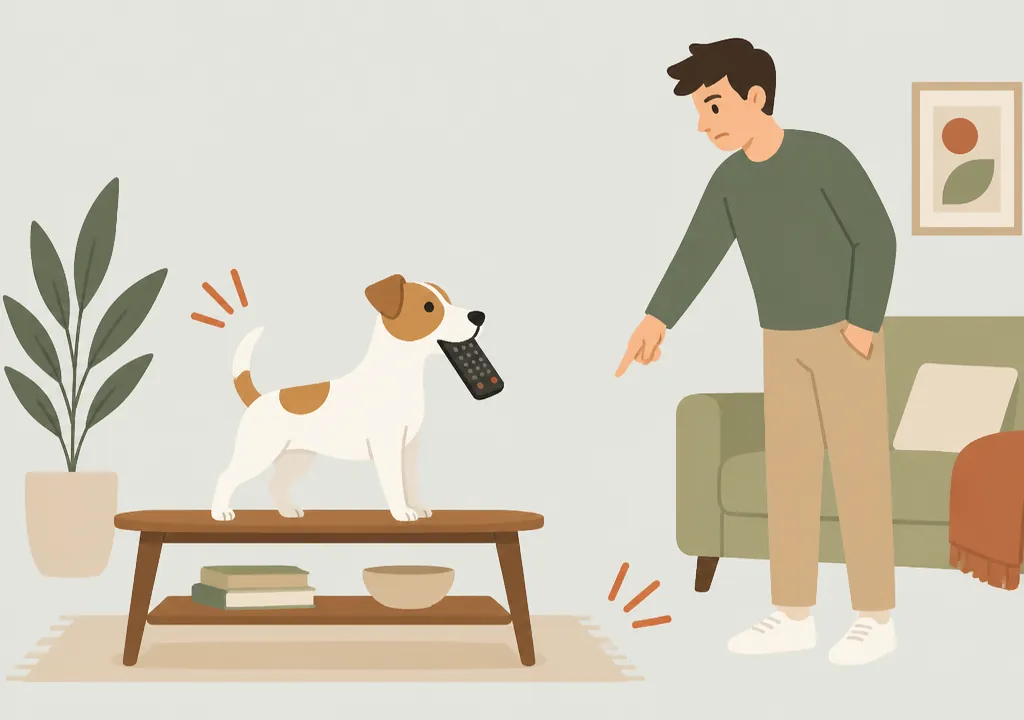
The teenage months
Patience while a young terrier tests every rule.
A four-month-old puppy may look taller, move faster and remember exactly where food is stored. That does not automatically make the puppy an adolescent. Cited welfare guidance places the start of canine adolescence between six and twelve months, so four months is better treated as a preparation window than an early declaration of teenage rebellion.
Below, we use a five-stage four-month check rather than a month-by-month training timeline. We set the developmental frame, audit morning and evening, stabilize toilet, chewing and recall systems, coordinate the household handoff and weekly scorecard, then escalate changes that exceed ordinary puppy management. Each stage prepares for the teenage months without pretending they have already arrived.
Read the full guide: Your 4 Month Old Jack Russell Terrier Starts Testing Every Rule