 Jack Russell
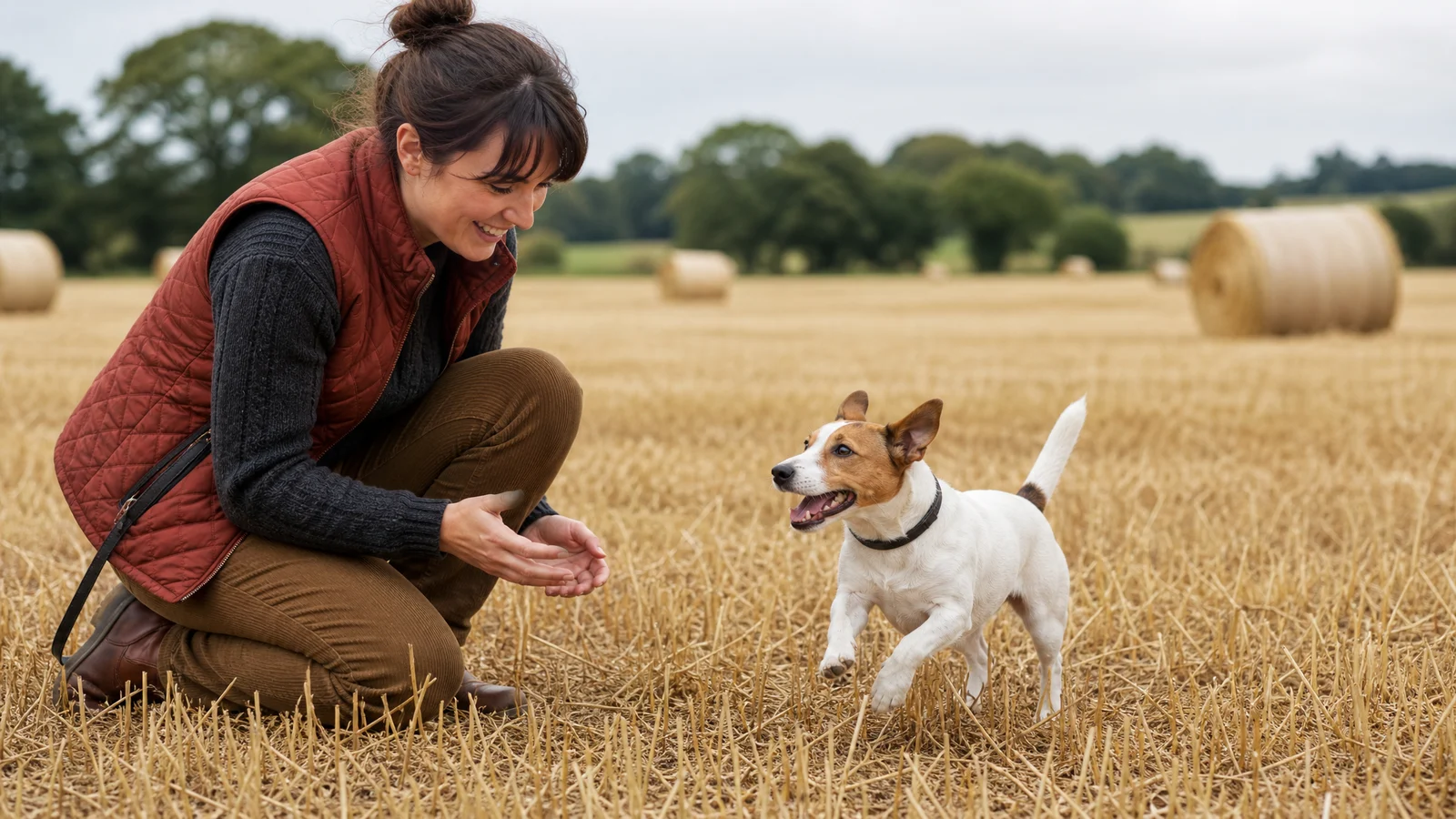
A leaf flicks across the path, the terrier's head turns and the rest of the world seems to disappear. The useful training moment is often not the full chase. It is the brief interval between noticing movement and committing to pursuit. That interval can be widened with careful practice, but it cannot be trusted as a substitute for a leash or secure area.
Below, we use six field decisions instead of the familiar long-line ladder. We identify the last useful interruption window, protect practice, rehearse three timing windows, repair a missed response, record decisions on one field card and define when professional help belongs. Reward choice and location changes sit inside those decisions rather than becoming parallel training stages.
Decision One for Jack Russell Terrier Recall Windows
Recall becomes harder as the dog moves deeper into a prey sequence. Early signs may include a sudden head turn, closed mouth, forward ears or a weight shift. Loading signs include a fixed stare, lowered body, stillness or quick scanning. A chase begins when the body launches and speed becomes rewarding by itself.
We use four windows to make that progression observable. The labels are not medical categories. They help the household decide whether to call, retreat or stop the exercise before excitement outruns the safety plan.
- Orient
- What the handler sees: Brief head turn or ear movement. Best response: Recall once, move away and reward. Next setup: Repeat at the same distance.
- Load
- What the handler sees: Stare, stillness or forward weight. Best response: Use the line to prevent pursuit, then retreat. Next setup: Add much more distance.
- Chase
- What the handler sees: Acceleration toward movement. Best response: Hold the safety boundary and leave calmly. Next setup: Return another day at an easier level.
- Recover
- What the handler sees: Sniffing resumes and muscles soften. Best response: Offer a simple search or quiet break. Next setup: End or choose a low-distraction task.
The UKC breed standard describes a bold, active and alert hunting terrier built to work underground. That history makes rapid orientation to movement understandable. It does not mean a Jack Russell Terrier cannot learn recall, and it does mean the handler should avoid testing that cue against uncontrolled wildlife.
Observe without deliberately provoking a chase. Start where distant movement is ordinary and the dog can still eat, sniff and turn. If the dog cannot respond to a familiar name or food scatter, the setup is already too difficult for recall practice.
Keep regular veterinary visits current. Pain, reduced hearing, vision changes or other medical concerns can alter response and recovery. Ask the veterinarian about a sudden loss of a previously reliable recall, especially when other behavior or physical changes appear.
Build a Recall Reward Ladder for Prey Distractions
A reward ladder ranks outcomes from ordinary to exceptional for this dog. The lowest rung might be a familiar food piece indoors. Higher rungs may include several soft treats delivered in sequence, permission to sniff a safe patch, a brief tug game or a rapid food search. The top reward is reserved for a fast turn away from a difficult distraction.
Test the ladder away from wildlife. Offer two options on separate repetitions and note which one keeps the dog engaged. Preference changes with hunger, weather, location and arousal, so the ladder is a working list rather than a permanent verdict.
Best Friends Animal Society advises handlers to protect the come cue and practice until the response is reflexive. Say the cue once. Repeating it while the dog remains fixed on a distraction teaches that the first several calls carry no consequence.
Deliver the reward close to the handler, then make staying nearby worthwhile for several seconds. Feed a short sequence, move together or scatter a few pieces behind the handler. A single treat followed by immediate release toward the trigger can produce a touch-and-go response instead of a durable return.
Decision Two for Protected Jack Russell Terrier Recall
A long line is a safety boundary, not a device for pulling the dog back. Attach it to a comfortable, well-fitted harness. Choose an open practice area away from traffic, fences, people, dogs and dense vegetation where the line could wrap or snag. Wear gloves when appropriate and keep the line organized in broad curves.
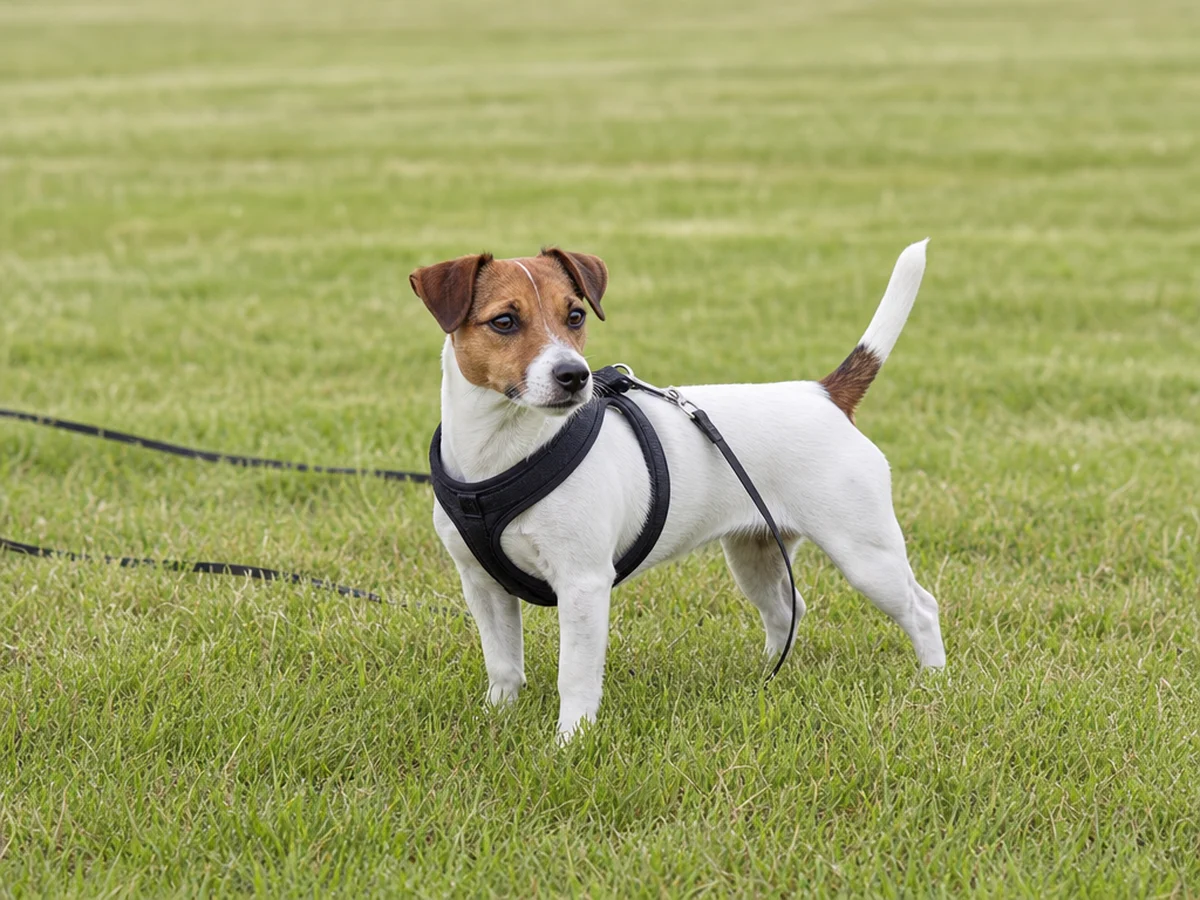
The RSPCA's recall guidance recommends a long training lead outdoors while the dog is still learning. The line prevents complete free range, which allows the handler to reward good decisions without staking safety on an unfinished skill.
Begin with only enough length for the planned repetition. Let the dog explore, wait for a natural glance back, say the recall cue and move away. Reward near the handler. If the dog does not turn, use the line only to stop forward travel, then increase distance from the distraction and help the dog recover.
Never loop the line around a hand or body. Do not let a dog reach full speed and hit the end. Shorten the working radius before excitement rises, and end the setup if safe handling becomes uncertain. Children should not manage long-line sessions.
Decision Three Across Jack Russell Terrier Recall Windows
The three practice windows below use the same cue but ask different questions. Work through them independently. Success in a quiet window does not require advancing to the next one that day.
Recall Before Interest Begins
Start in a quiet field or large enclosed space. Recall while the dog is casually sniffing, not staring at anything. Move backward, reward the turn and release with a separate cue. Several easy repetitions establish the movement pattern before a real interruption is needed.
Keep sessions brief enough that the cue stays valuable. Mix recall with free sniffing so coming back does not always end exploration. The Jack Russell Terrier Club of America notes that the breed requires substantial activity and engagement. Purposeful practice works better than standing in one place and calling repeatedly.
Recall at the First Orient
Choose a mild, distant distraction such as a person walking across the far edge of the area. The instant the dog notices, say the cue once and move diagonally away. Reward generously when the dog turns. A diagonal retreat is easier to follow than a handler standing still behind the dog.
If the mouth closes, the body freezes or the line begins to tighten, skip the recall. Create distance and wait for recovery. Training the correct window includes declining repetitions that have already become unfair.
Recall After the Trigger Leaves
Allow a distant trigger to pass out of view while the dog remains safely managed. Wait for a softer body or renewed sniffing, then recall. This recovery-window exercise teaches the dog to reconnect after arousal instead of scanning indefinitely for the vanished movement.
Reward calm breathing and proximity as well as speed. A dog who returns quickly but remains rigid may need a longer decompression break. The response is not complete until both ends of the leash can move away safely.
Change the Picture Without Gambling the Recall Cue
Increase one feature at a time. A new location at the same distance is one change. A familiar location with slightly faster movement is another. Changing distance, speed, sound and location together makes a failed response difficult to interpret.
Use planned helpers rather than wildlife when possible. A helper can walk, pause or roll an object on a predictable path far away. Keep the object inaccessible and stop movement if the dog begins loading. The purpose is to practice an early turn, not simulate the most exciting chase imaginable.
The site's guide to Jack Russell Terrier temperament explains why independent problem solving can look like defiance. In recall work, treat a miss as information about distance, timing or reward value. A label does not tell the handler what to change next.
Do not graduate to off-leash practice simply because several long-line repetitions succeeded. Use secure fenced areas for advanced work. Local leash rules, wildlife protection and the individual dog's history still apply even when training is progressing.
Decision Four After a Missed Jack Russell Terrier Recall
When the dog does not respond, avoid anger and rapid cue repetition. Prevent pursuit with the line, turn away from the trigger and walk until the body softens. Then ask for an easy behavior or scatter food in clean ground if the dog can eat. The reset should restore thinking, not punish the dog for being over threshold.
Do not scold after the dog finally reaches the handler. That makes arrival risky and can weaken the next response. Reward the return, then change the setup. The useful question is what happened in the seconds before the cue.
A miss may mean the trigger was too close, the dog had already entered the loading stage, the reward was too weak or the session lasted too long. Change only the most likely variable on the next attempt. If the answer is unclear, make the whole picture easier.
Repeated misses call for management, not harder tests. Walk at quieter times, use routes with open sight lines and create turning space. The site's complete guide on how to train can support foundation skills between field sessions.
Decision Five on the Jack Russell Terrier Recall Field Card
Carry a small card or use a phone note after the walk. Record enough detail to reproduce success without turning every outing into an experiment:
- Name the location, distance and visible distraction.
- Mark the window as orient, load, chase prevented or recovery.
- Record whether the dog turned on the first cue.
- Note which reward held attention near the handler.
- Estimate how long the dog needed to resume soft movement and sniffing.
Review groups of sessions, not one dramatic moment. Progress may appear as earlier glances toward the handler, a slower build toward fixation, faster recovery or the ability to work at the same distance on a busier day.
A field card also prevents accidental difficulty creep. If three sessions occurred at thirty meters, the next step might be twenty-seven meters, not a crowded park. Small changes make the dog's decision visible.
Decision Six for Difficult Jack Russell Terrier Recall
Consult a credentialed trainer who works through rewards when pursuit has caused escapes, the handler cannot safely manage the line or the dog remains unable to disengage at practical distances. Share the field card and identify the earliest observable signs. A professional can design controlled setups without exposing wildlife or bystanders.
Contact the veterinarian promptly when recall changes suddenly or the dog shows pain, disorientation, altered sleep, reduced hearing, vision difficulty or unusual fatigue. Training should not cover a medical problem.
Reliable recall around prey drive is not a promise that a terrier can roam anywhere. It is a layered system: secure equipment prevents the chase, distance preserves thinking, one protected cue starts the turn and the reward keeps the dog close. Today, identify the dog's earliest orienting sign and practice one easy return before that sign grows into pursuit.
 BehaviorWhen a Jack Russell Terrier Picks Fights: Teaching Calm
 BehaviorA Bored Jack Russell Terrier Invents Jobs, So Offer Chews
 Puppy trainingTeaching Bite Control to a Jack Russell Terrier Puppy