 Jack Russell
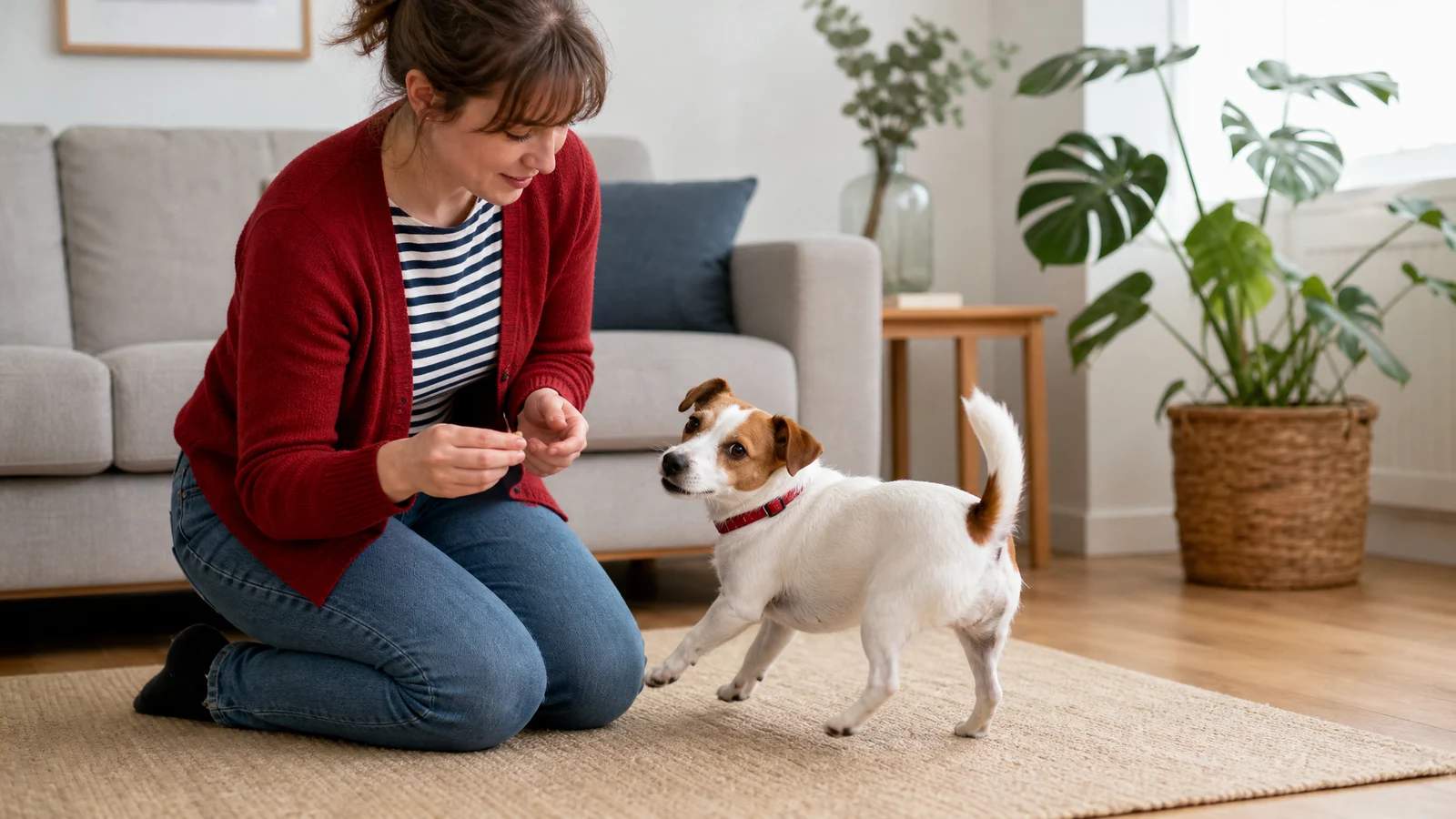
Owners describe the same small scene again and again. Their Jack Russell Terrier has sat on cue many times, and today, with a treat in view, they look at you, turn on a heel and trot off to inspect a leaf. It reads as defiance. Usually it is a quick-minded terrier making a decision, and the decision is that something else pays better right now.
This matters especially for the Jack Russell Terrier. A dog labeled stubborn tends to get longer, sterner sessions, and that is how a bright terrier learns to tune you out. Treat the same behavior as cleverness and you get a funny, devoted partner. Read on for how the ratings describe the temperament, short sessions, a daily job, why known cues fail, how to pay well, how to answer limit-testing, and which signs tell you it is working.
Clever Jack Russell Terrier Temperament Is Not Stubbornness
Start with the published trait ratings for the breed. Trainability is 3 of 5 for the Russell Terrier and 4 of 5 for the Parson Russell Terrier. The low end of that scale is self-willed and the top is eager to please. A 3 reads "agreeable," which is a long way from eager. The breed's parent club adds that these terriers are extremely intelligent and keep testing their limits throughout their lives.
Put those together and you do not get a dog who refuses. You get a dog who weighs every request against everything else going on and asks what is in it for them. We have trained this breed for many years, and nearly every stubborn complaint we hear comes down to a bright terrier facing a weak reward, a dull routine or an unclear signal.
The same ratings put mental stimulation needs at 5 of 5 for the Russell and 4 of 5 for the Parson, the top of a scale that ends in "needs a job or activity." The Parson standard calls the dog an independent, energetic terrier who requires their due portion of attention. Independence is not a defect here. These dogs were built to think for themselves.
Calm Is a Skill You Build
One reframe saves a great deal of frustration. Many owners assume a high-energy dog will settle once tired enough, and for many Jacks this simply does not happen. Owners with a full schedule of walks, play and puzzle toys still describe dogs who stay wound up, and puppies who are very hard to tire out. Relaxing is something you teach with rewards. The sections below put that skill and the others in the order you would work on them.
Keep Jack Russell Terrier Training Sessions Short
The first working principle is the easiest to apply: stop before your dog gets bored. A clever terrier masters a cue fast and then goes looking for something better, so long drills mostly teach drifting. Animal welfare groups advise short but regular sessions so a dog is never overwhelmed.
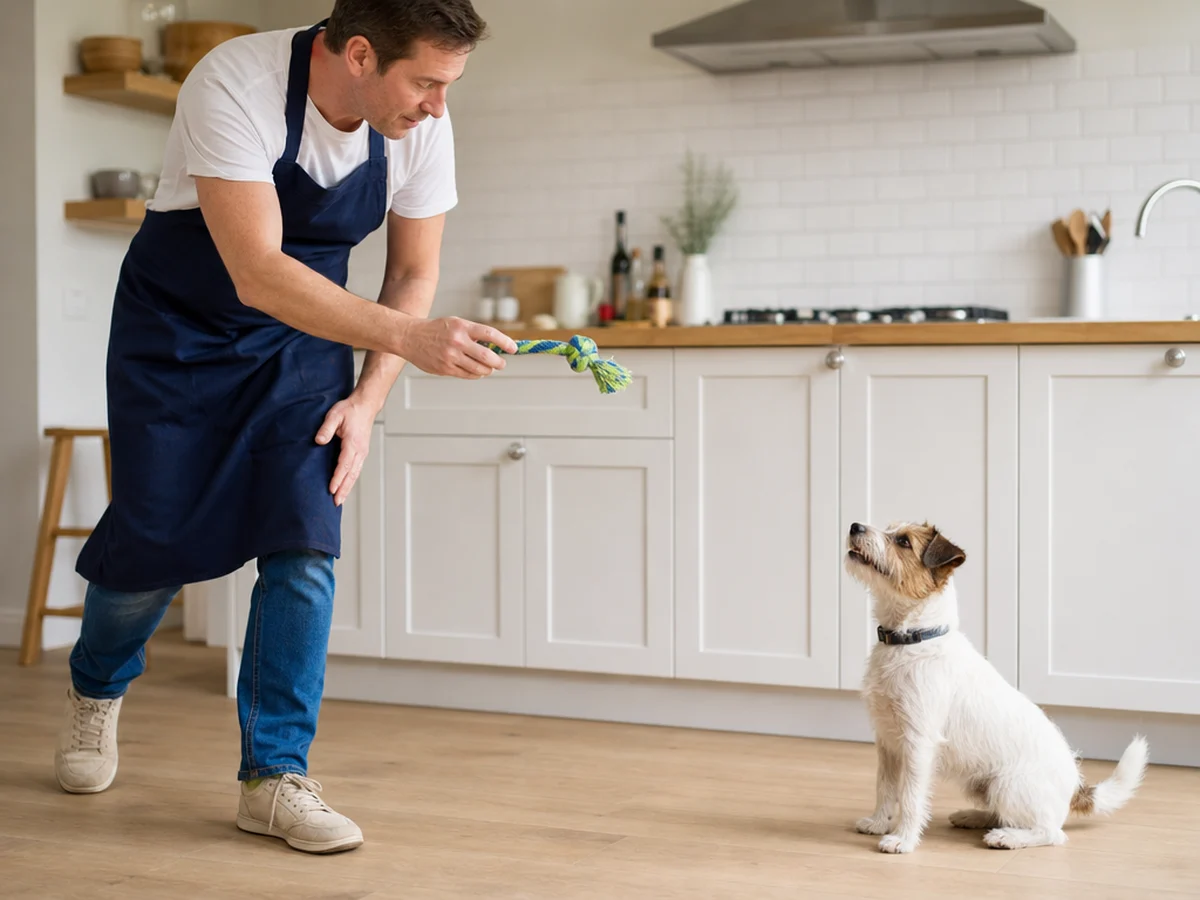
Pleasant sessions also keep stress low. A 2020 study of 92 dogs linked reward-based training schools to calmer body language, less panting and smaller cortisol rises after training.
Count Repetitions, Not Minutes
A handful of tries at one skill is plenty. Spreading several mini-sessions across the day works better than a single long block, and each one fits into a moment you already have, such as before dinner or at the door. Here is a plan you can run in that order.
Open with a cue your dog knows well and pay generously, so the session begins with a win. Then move to the single skill you are building, such as a longer stay, and ask for only a few repetitions. Pay quickly with a small, soft treat, or with a quick game of tug for an especially good try.
Finish by repeating the easy cue once more, then release with a cheerful word and let your dog sniff or play.
Rotating the focus across the day keeps a clever dog curious. This sample schedule shows one way to do it.
| Moment | Skill | Reward idea |
|---|---|---|
| Before breakfast | Name response and sit | Part of the meal, hand-fed |
| Midday | Settle on a mat | A chew, given while they lie still |
| After a walk | Come when called indoors | Soft treats and a quick tug |
| Evening | One new trick | Tiny pieces of a favorite treat |
Where to End a Session
Finish while your dog is still keen. If they start sniffing the floor, looking past you or answering slowly, you went one repetition too far, so make the next session shorter.
A good last step is a settle on a mat, with a treat for lying quietly. It closes the session on calm instead of excitement and starts building the off switch this breed so often lacks.
A Terrier Temperament Needs a Daily Job
The second principle is that a Jack Russell Terrier without a job will hire themselves. The parent club notes that terriers with no outlet for their instincts invent work, and the usual picks include endless digging, chasing cars and going after bugs or leaves. Our guide to stopping Jack Russell yard digging covers the first of those in depth. Daily mental work is the prevention, and it should require thinking, not only running.
- Serve some meals from food puzzles, which slow eating and give the brain real work.
- Scatter a few treats around a room, cue your dog to find them and make the hiding places harder over time.
- Teach one new trick a week, or chain two known tricks into a sequence.
- Guide your dog through a small course of cushions and a broom handle for treats.
- Practice settling on a mat or in the crate with a chew, because lying still is a job too.
Teach the Off Switch on Purpose
Common advice says to tire the dog out first. For many Jacks that backfires, because you end up with a fitter terrier who is still wound up. What works better is teaching rest directly. Crate training and calm settle routines have taught high-energy Jack mixes to relax, creating distinct active and quiet periods. Reward every stretch of quiet lying down, and start early with our guide to Jack Russell crate time and alone time.
Predictability helps too. Many owners find that a steady routine with set exercise times calms a pestering dog, who learns to switch from chill to ready-to-go when the usual hour arrives.
Why Does My Jack Russell Terrier Ignore Known Cues?
Almost every owner meets this: a dog who sat perfectly in the kitchen and acts as if they never heard the word at the park. They have rarely forgotten anything. To a terrier, a cue learned in one room is a different task in a new place full of new smells. Work through the likely causes in this order.
- Value: is your reward worth more to your dog than whatever else is on offer right now?
- Distraction: is the setting busier than anything you have practiced in? Move farther from it.
- Context: has your dog only practiced this cue in one place, or with you standing in one pose?
- Clarity: does everyone at home use the same word and the same hand signal? Inconsistency confuses a terrier.
- Repetition: saying the cue again and again teaches the word to mean nothing, so say it once, wait, then help.
Proof the Cue Step by Step
Proofing means adding difficulty gradually. Practice in this order: kitchen, living room, yard, quiet sidewalk, then a busier street. At each stop, drop back to easy repetitions if your dog starts missing.
Change only one thing at a time, whether distance, duration or distraction. When your dog misses, make the task easier rather than louder.
Training Rewards Must Outbid Every Distraction
The third principle is close to economics. Everything in the environment is paying your terrier in some way, and your reward has to pay more. Several survey studies found better obedience from dogs taught with reward-based methods, and a dog this sharp notices good pay. Sort your rewards into tiers and match each tier to the place.
| Reward tier | Examples | Use it for |
|---|---|---|
| Everyday | Dry kibble, calm praise | Quiet rooms and easy cues |
| Better | Soft, smelly training treats | New skills and the yard |
| Top | Tiny pieces of cooked chicken or cheese | Walks, busy places, recall, leave it |
| Play | A tug toy or a short game with you | Breaking up sessions with an energetic dog |
Walks test this hard. They can be slow if your Jack stops to investigate every post and upright object, and some Jacks grab or seek food on the street, so stay alert. Reward your dog for looking back at you, give a release word that allows sniffing at a post you choose, and teach a clear leave it by paying from your hand instead of from the ground.
Dog-directed reactivity is a real pattern as well, from darting at passing dogs to barking and fighting to reach them. Practice leave it with a treat from your hand, starting far from other dogs and paying well when your Jack looks away. Build the distance down gradually over many sessions, and cross the street when you need to. Plan on managing the situation too, because a charging off-leash dog can overwhelm even well-practiced leave-it work.
Is Testing Limits Part of Jack Russell Temperament?
Yes, and it does not end with adolescence. Expect nudging for attention, barking at the counter, a stolen sock to start a chase and another attempt at the couch after you said no. This is a clever terrier checking whether the rules still hold. Answer it the same calm way every time, because we specialize in this breed's behavior and nothing wears down a Jack's respect for rules faster than rules that keep changing.
The parent club advises positive reinforcement where possible: reward good behavior and ignore bad behavior. For attention-seeking, that means turning away until the barking or pawing stops, then rewarding the quiet right away. Mild, reward-compatible consequences also work, such as a calm interrupt, ending a game that got too rough or a brief time-out in a boring room.
Behaviors that pay for themselves, like digging or stealing, cannot be ignored away. Manage those by changing the environment.
A Household Checklist
- Agree on cue words and hand signals as a household so every person says the same thing.
- Decide the rules on furniture, begging and jumping before they come up, and hold them every day.
- Pay wanted behavior right away, and keep easy-to-grab treats in every room so no one skips payment.
- Return to easy basics after a big change such as a move, since owners of adopted adults report that dog-directed behavior can get much worse afterward.
Temperament Training: Signs of Progress and When to Call a Pro
Progress with a Jack is rarely a straight line, so judge by signs instead of the calendar. These are the ones worth watching for.
Start with the everyday skills. Your dog answers known cues in new places after only a hint, and they glance back at you on walks without being asked. Leave it holds when food lands on the sidewalk, at least at a distance.
Look at the shape of the day too. Their day has clear active and quiet stretches, and they settle on a mat or in the crate. Sessions end with your dog still keen, and pestering fades outside the usual times.
Other signs call for a qualified, reward-based trainer or a veterinary behaviorist.
- Your dog lunges, bites or fights with other dogs, including a household dog. Violent fights over toys or food with little warning growl are a clear call for help.
- Your dog loves people and the household dog but goes after visiting dogs. Do not rely on supervision-free visits.
- A long-time housemate such as a cat suddenly becomes a target. Our guide to living with cats covers what training can and cannot do.
- Your dog stays wound up even with a full routine and rewards for settling.
- Behavior or responsiveness changes suddenly. Call your veterinarian first, and keep up regular vet visits.
The label stubborn usually describes a terrier with high mental needs and too little to do with them. Give your Jack a daily job, teach calm on purpose, pay better than the squirrel does and keep sessions short. A dog raised this way stops inventing their own work and becomes the clever, loving companion this breed is known for.
 Exercise and jobsHiking With a Jack Russell Terrier: Trail Manners and Recall
 Exercise and jobsExercise and Brain Games for a Tireless Jack Russell Terrier
 Exercise and jobsApartment Living With a Jack Russell Terrier: A Daily Routine