 Jack Russell
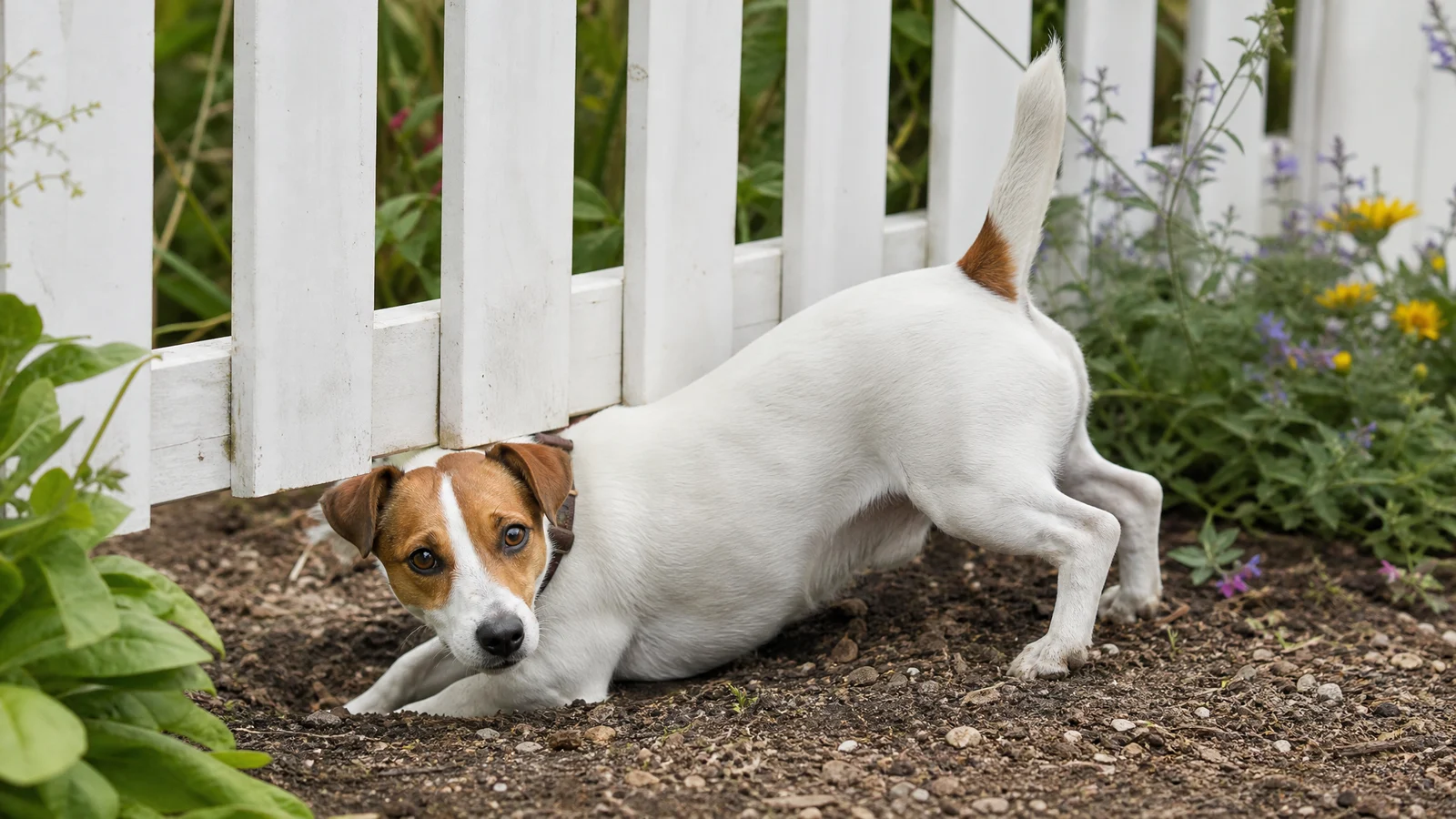
One loose board can defeat an otherwise secure yard. A Jack Russell Terrier does not need to test every foot of fence equally. The dog needs one repeatable route under a low edge, through a gate gap or onto an object that makes the top reachable. That route becomes more efficient each time it works.
Below, we turn the yard into a nine-stop inspection route rather than repeat one generic training ladder. We classify the exit, read the entire perimeter, repair access, build a useful center, rehearse route-specific turns, separate legal digging, log supervised choices and set clear thresholds for outside help. Each stop answers a different physical or handling decision.
Classify Jack Russell Terrier Digging and Escaping
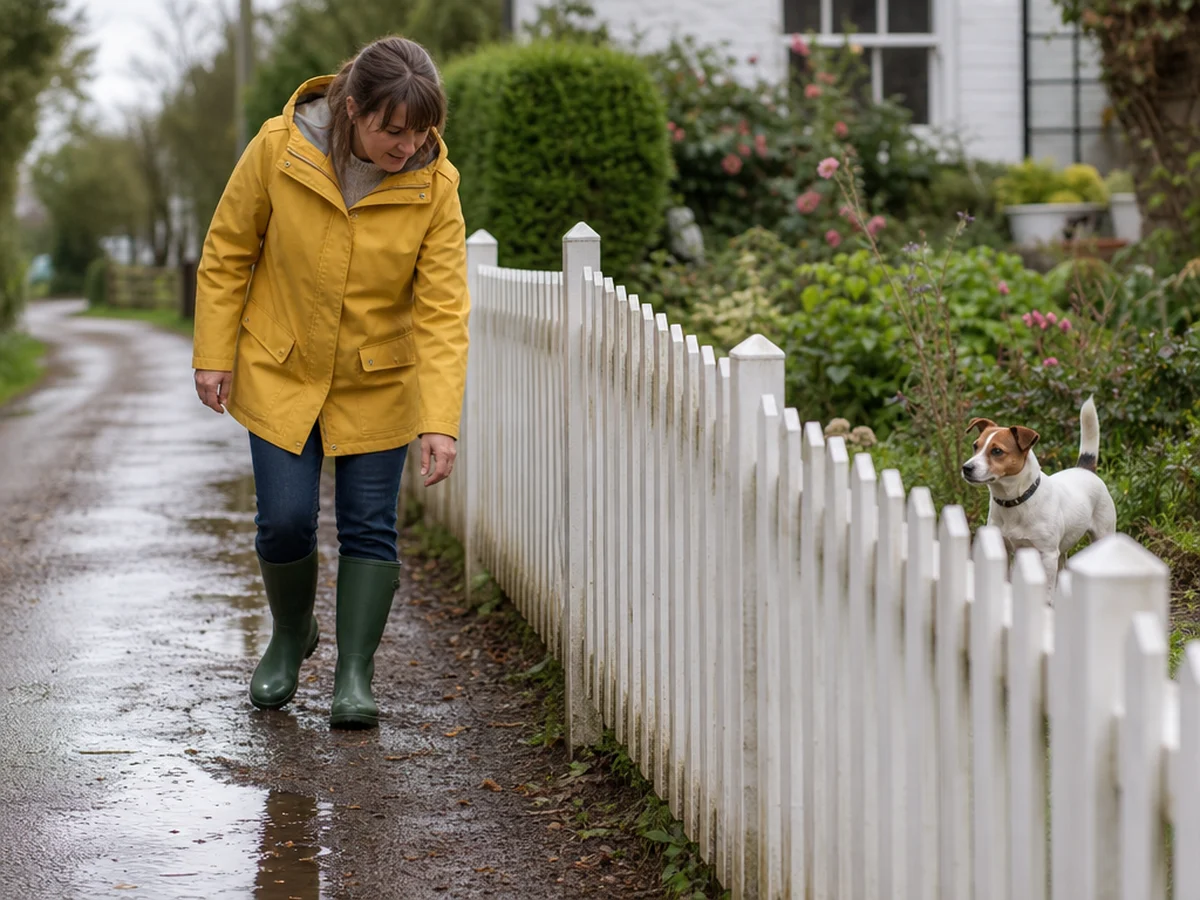
Start with the physical route, not a theory about stubbornness. An under-fence exit leaves disturbed soil, worn grass or a gap that changes after rain. An over-fence exit may begin beside a bench, woodpile or low crosspiece. A through-fence exit often appears where wire bends or boards spread.
Gate escapes have their own pattern. The dog may wait behind a person, nose the bottom corner or run toward the hinge side as the gate swings. Watch from a safe position or use a camera while the dog remains supervised. Do not stage a successful escape to confirm a guess.
The UKC breed standard describes a bold, active hunting terrier built for work underground. That history helps explain why a narrow opening or loose soil deserves investigation. It does not make roaming safe or inevitable.
Record what happened immediately before the attempt. Wildlife movement, a neighboring dog, delivery activity, a person leaving or a long unstructured yard period can each point to a different trigger. Location and timing are more useful than a broad label such as escape artist.
Keep regular veterinary visits current. A sudden change in restlessness, elimination, sleep or behavior can have a health component. Ask the veterinarian about abrupt new escape attempts, especially when they arrive with other physical or behavioral changes.
Audit the Fence Before Digging and Escaping Repeats
Walk the entire perimeter while the dog is indoors. Inspect both sides when access is permitted, because a secure-looking interior can hide washed soil or damage outside. Repeat the walk after storms, yard work, deliveries and seasonal ground changes.
| Route type | Evidence to find | Immediate barrier action | Practice location |
|---|---|---|---|
| Under | Loose soil, worn path, daylight below edge | Block access and repair the base | Several feet inside the yard |
| Over | Launch object, toe holds, landing marks | Remove launch access and assess height | Clear interior boundary lane |
| Through | Bent wire, spread boards, flexible panel | Close the opening with safe materials | Parallel to the repaired section |
| Gate | Nose marks, worn corner, rushing pattern | Add a secure entry routine | Marked waiting point away from swing |
Read the Jack Russell Terrier Digging and Escaping Perimeter
Look upward and downward. A small terrier can use objects adults stop noticing, including a planter, stacked material or a low platform. At ground level, check drainage dips, soft corners and places where repeated pacing has removed soil.
The related Parson Russell standard describes a ground-covering gait with drive from behind. The practical lesson is that a quick approach needs space. Keep the training lane well inside the boundary so the dog can turn without reaching the weak point.
Inspect gates as systems rather than single panels. Check latch height, hinge gaps, clearance below and what happens when a person carries bags through. Every household member should know which side of the gate the dog occupies before the latch moves.
Check the path people take from the house to the gate. A terrier who can race straight from an open door reaches the gate before a person can organize bags or visitors. An interior pause point, closed house door and clear handoff between adults reduce that rush without relying on a last-second cue.
Speak with neighbors before changing shared boundaries. Confirm property lines, access and local requirements rather than attaching material to a fence you do not control. Keep the dog away from work areas until tools, offcuts and temporary openings are gone.
Repair Access Before Training Digging and Escaping
Training cannot make an open route safe. Keep the dog indoors or on a secure leash with an adult while repairs are incomplete. Choose materials and installation methods suitable for the property, and consult a qualified fence professional when strength, height or below-ground barriers are uncertain.
A visual screen can reduce some triggers, but it is not a structural repair. A dog can still investigate the base or gate behind an opaque panel. Recheck fasteners and edges so the screen itself cannot become loose material or a climbing surface.
Do not leave a tethered dog alone in the yard. A line can snag, wrap around objects or give the dog speed before reaching the end. For training, a person holds an appropriate leash and keeps enough distance from the boundary to prevent contact.
Build a Useful Center. Move exciting yard activities toward the center. Place water, resting shade, search games and social time away from the fence. The layout should make the useful part of the yard easier to reach than the perimeter.
- Create a small arrival routine for the yard. Enter together, pause while the person scans the boundary, then move to a central activity. That sequence prevents the first seconds outside from becoming a sprint toward yesterday's interesting location.
- Recheck temporary changes such as garden furniture, yard waste and snow piles. Objects that were harmless beside a solid panel can become steps near a lower section. Store them where they cannot create a new approach route.
- Use the site's guide to Jack Russell behavior problems when the main issue is excavation rather than leaving the property. This article stays focused on exits, while the digging guide covers the broader instinct and construction of a legal area.
Rehearse Jack Russell Terrier Boundary Turns
Mark an interior line well away from the fence. Walk parallel to that line with the dog on leash. Before attention fixes on the boundary, say a cheerful turn cue, move toward the center and place the reward on the ground inside the yard.
The reward location matters. Food delivered beside the fence can pull the dog back to the place you want to devalue. Place it inward, then continue to a brief search, toy game or calm social activity near the center.
Turns Near an Under-Fence History. Begin far from the repaired base. Approach on a shallow angle, cue the turn and reward several steps inward. If the dog accelerates, lowers the head or stops responding, increase distance on the next repetition.
Practice when the ground is quiet before adding wildlife or neighbor activity. The repaired fence remains the safety system. The turn is a cooperative way to leave the area, not proof the route can be reopened.
Rehearse Jack Russell Terrier Digging and Escaping at the Gate
Place a mat or visible station away from the gate swing. Reward the dog for reaching the station while a person touches the latch without opening it. Later, move the gate through a small arc while the dog keeps the interior position.
Use a second barrier or another adult when real traffic must pass. Practice cannot depend on perfect timing beside an open exit. Close and secure the gate before releasing the dog from the station.
Separate Legal Digging From Escaping
A legal dig area belongs away from every fence, gate, foundation and buried utility. Choose a location the household can supervise. Use loose dog-safe material and ask a property professional about underground hazards before preparing the site.
Make the location valuable by hiding a few safe food pieces or a familiar toy near the surface. Humane World's consistent-location guidance explains how one outdoor spot and one cue can create a clear habit. Apply only that placement principle here. Bring the dog to the same legal dig area and pair one cue with the permitted action, without turning the whole yard into a search for buried rewards.
Interrupt boundary digging early by calling the dog toward the center and guiding them to the legal area. Reward engagement there. If the dog cannot turn away, end yard access calmly and return later with more distance and closer supervision.
A dig area does not compensate for an unsafe fence. Keep the perimeter repair and supervision plan active even when the dog uses the legal spot reliably. The two systems solve different problems.
Supervise Digging and Escaping With a Yard Log
Supervision means an adult is present and watching, not looking through a window occasionally. Begin each yard visit with a perimeter glance, then guide the dog toward a central activity. End before repeated scanning turns into a route rehearsal.
Use a short log to reveal patterns that memory misses. Make the entry while the route, trigger and recovery are still easy to describe:
- Record the time, weather and part of the yard the dog checked first.
- Name the visible trigger, or write unknown instead of guessing.
- Note the distance at which the dog could turn back toward the center.
- Record which central activity held attention and how the dog settled afterward.
- Inspect that boundary location before the next yard visit.
Compare several visits before changing the plan. A route that appears only when the neighboring dog is outside calls for different timing and screening. Repeated inspection after long idle periods calls for shorter, purposeful yard sessions.
Include successful visits in the log. Notes about calm sniffing, central play and easy returns show which conditions support staying inside. A record made only after attempts can make the yard seem less predictable than it is.
The site's Jack Russell sports guide offers structured outlets beyond the yard. Those activities can enrich the week, but the fence still needs independent physical security.
Progress looks like fewer boundary approaches, quicker inward turns and voluntary return to central activities. It does not mean testing the dog alone. Continue supervision because one new gap can restore the old result immediately.
When Jack Russell Terrier Escaping Needs More Help
Ask a behavior professional who uses rewards to observe the layout when repeated attempts continue after repair and supervised practice. Share the route classification and yard log. Specific evidence helps the professional distinguish trigger chasing, gate rushing, isolation distress and a learned route.
Contact the veterinarian promptly if escape behavior appears suddenly or arrives with panic, pain, confusion, unusual thirst, changed elimination or inability to settle. A behavior plan should not hide a medical change.
Today, walk the perimeter without the dog and mark the first weak point you find. Protect that location before the next yard visit, then rehearse one easy turn well inside the boundary. A secure yard is built from physical closure, thoughtful placement and supervised choices, not from waiting to see whether the terrier tries again.
 BehaviorWhen a Jack Russell Terrier Freezes Over a Toy: Trade Games
 Training basicsIf a Jack Russell Terrier Spots Prey, Here Is How They Come Back
 BehaviorWhen a Jack Russell Terrier Picks Fights: Teaching Calm