 Jack Russell
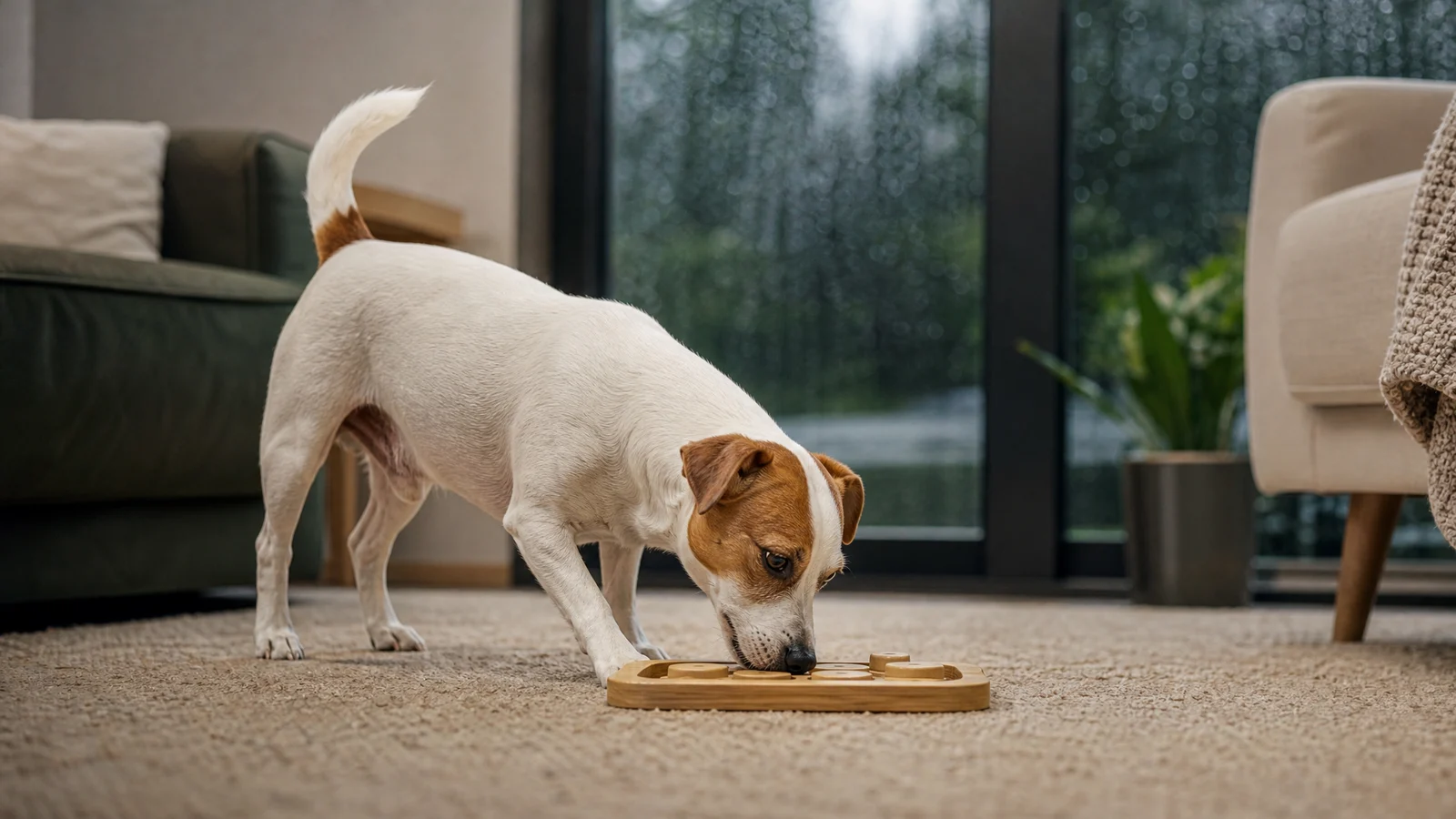
What can a high-energy Jack Russell Terrier do when rain shrinks the outdoor plan? The usual answer is often “more indoor play,” but constant excitement can leave the dog faster and less able to settle. A useful rainy day needs jobs with rules, success points and calm handoffs.
This roster assigns short shifts in searching, sorting, delivery, station work, problem solving and cleanup. Each job asks the dog to gather information or make a choice, then finish clearly. The goal is not to replace every outdoor need. It is to create purposeful indoor work that fits the room, protects the household and leaves the dog able to recover. This guide covers how to set up, rotate and close each shift. We recommend starting with the easiest role.
Jack Russell Terrier Dog Sports as Short Shifts
A shift begins with a prepared work area and one known action. It ends while the dog still understands the task. Put unused materials away between jobs so the room does not become an invitation to grab everything at once.
The related Parson Russell Terrier is described by the AKC breed page as suited to sports requiring agility, speed and intelligence. Indoors, channel that readiness into precision rather than height or speed. A nose touch, careful search or object delivery can provide a real assignment in limited space.
| Shift | Main skill | Finish signal |
|---|---|---|
| Search | Using the nose methodically | Final find on a mat |
| Sort | Choosing one named object | Object returned to the floor |
| Deliver | Carrying along a clear route | Trade at the destination |
| Station | Waiting during household motion | Release from the mat |
| Solve | Moving one simple obstacle | Easy success, then removal |
| Cleanup | Placing toys in a container | Empty floor and calm reward |
Choose a shift by the dog's behavior, not by a rigid order. Methodical sniffing may point toward search, while a dog offering eye contact may enjoy sorting or delivery. If they are already overexcited, start with a simple station job rather than fast object play.
Keep the materials for each role in separate containers. Bring out only what the current shift needs, then clear it before the handoff. That visual change helps the dog distinguish searching from delivery and makes the finish easier to recognize.
Indoor Search Jobs From Dog Sports
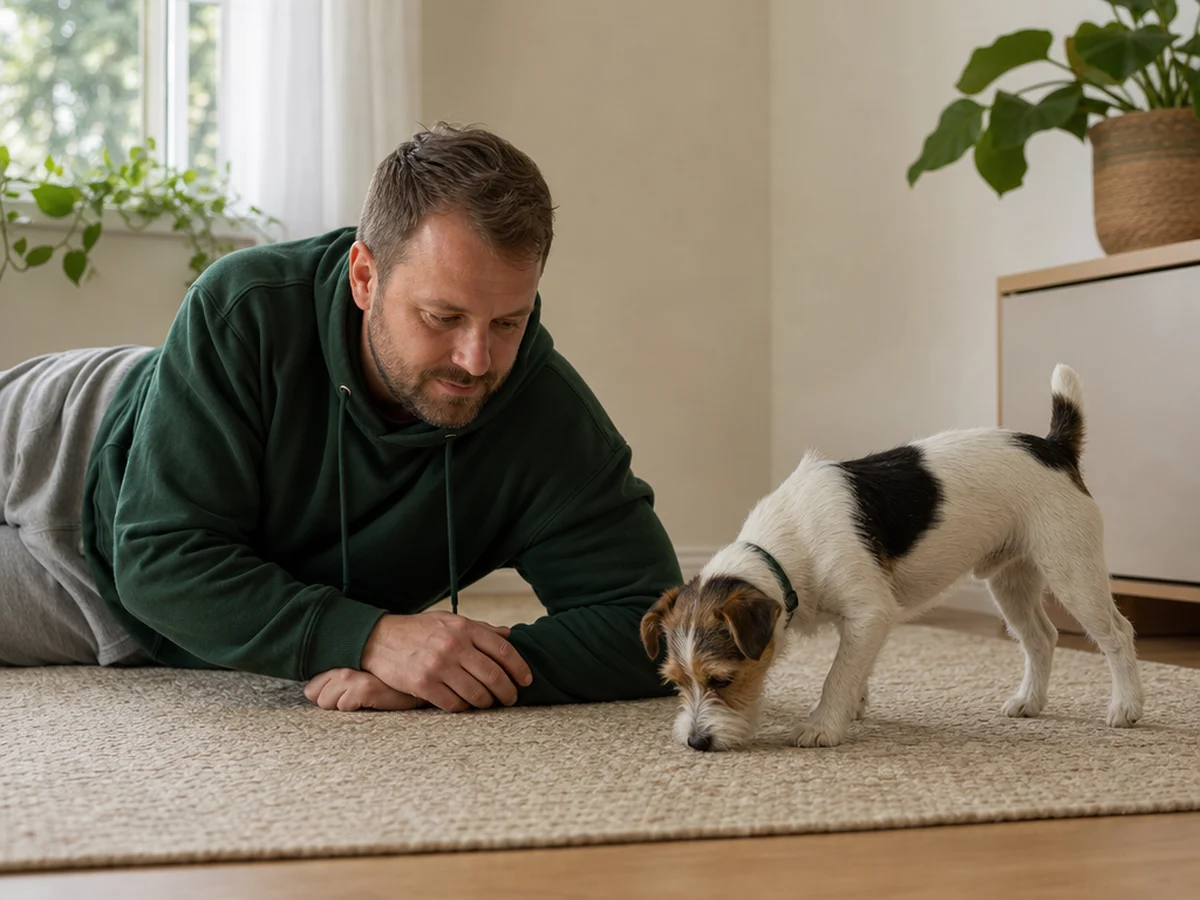
Clear one room and place several pieces of food where the dog can see them. Release with a consistent search cue and let the dog work without pointing to every piece. Your quiet presence makes the nose, not your moving hand, the main source of information.
Move From Visible to Partly Hidden
After several easy rounds, place food partly behind a sturdy object or beside a doorway. Keep every find accessible from the floor. Difficulty should come from careful sniffing, not climbing, force or entering unsafe gaps.
Best Friends nose work explains that many dogs can participate and that the activity can help high-energy dogs focus. Preserve that focus by making the problem solvable. If hard pawing or barking begins, reveal the next item and simplify.
Give the Search a Clean Ending
Place the final reward on a mat and use a finish cue. Pick up any remaining food while the dog rests there. The closing pattern prevents a completed search from turning into endless inspection of furniture.
Change the room before making the hiding places much harder. A familiar problem in a new safe location already adds information. Keep one part of the job predictable so novelty does not overwhelm the rules.
- Remove cords, unstable objects and access to narrow spaces.
- Use part of a normal meal when that suits the dog's feeding plan.
- Keep food off counters, chairs and other raised surfaces.
- End with an easy find before clearing the work area.
Sorting Jobs for Jack Russell Terrier Dog Sports
Sorting begins with two objects that feel and look different. Present the familiar item, mark a nose touch and reward. Add the second object only after the dog readily chooses the first one.
Say the item's name once, then wait. Reward a touch to the named item and reset both objects to neutral positions. If the dog guesses rapidly, move one item farther away and return to easier single-object repetitions.
Help the Dog Make the Right Choice
When the dog touches the other item, pause and reset with the named object easier to see. Reward the next successful choice, then vary positions so the dog learns the object rather than one side of the room.
Keep the sorting job low and quiet. Do not wave objects above the dog's head or encourage leaping to select one. The assignment is discrimination and focus, not athletic performance.
Once two objects are reliable, use the same skill to choose a toy for another shift. Put the unselected item away and begin a delivery or cleanup job. That handoff makes the choice useful within the rainy-day roster.
Sorting can also use two safe mats with different textures. Reward stepping onto the named mat, then release and reset from a new angle. Keep both surfaces flat and secure so the job tests discrimination rather than balance.
Delivery Jobs From Indoor Dog Sports
A delivery job combines picking up, carrying and trading as separate skills. Begin with the dog lifting a familiar toy. Mark the lift and trade for food before asking for any movement.
Clear the Delivery Route
Choose a short route with secure footing and no tight turn around furniture. Stand near the destination, invite the dog toward you and reward the arrival before asking for the trade. Increase distance only while the carry remains calm.
Deliver to a person, mat or open container on the floor. Avoid carrying fragile household objects. A soft familiar toy lets the dog learn the route without creating a safety problem if it drops.
Trade Without Ending Every Job
Offer food, mark the release and sometimes return the toy after payment. Returning it teaches that giving up the object does not always end access. That expectation supports a calmer mouth and more willing delivery.
If the dog avoids you or stiffens around the object, stop the exercise. Do not take it by force. A qualified reward-based professional can help with tense possession, while the rainy-day plan uses food searches and station jobs instead.
For additional structured outlets, see the guide to Jack Russell sports. The indoor delivery remains a household job with short routes and controlled objects. It should never become a race through rooms.
Station Jobs During Household Activity
A station job gives the dog a role while people cook, fold laundry or work at a desk. Place a mat outside the traffic path and reward voluntary contact. Build from stepping onto it to lying down and remaining there briefly.
Add one familiar movement at a time. Open an empty cabinet, carry one item or sit at the desk, then reward the dog on the mat. If they leave repeatedly, shorten the activity or move the station closer.
This is active learning even though the dog is still. They are noticing movement and choosing a known location. Deliver rewards low and calmly so payment supports the posture you want.
- Put the station where the dog can see without blocking the task.
- Begin with household actions that are quiet and familiar.
- Reward before the dog leaves to investigate.
- Use a release cue so the end of the shift is clear.
A station can also bridge two more active jobs. Ask for a brief mat rest after searching, then begin sorting only when the dog can attend again. That pause protects the roster from becoming one long surge of stimulation.
Solvable Problem Jobs
A problem job asks the dog to move one easy obstacle to reach food. Place food under an open cup tipped on its side, beneath a loose flap or inside an uncovered box. The first setup should reveal the answer quickly.
Reward investigation even before the food is reached. A nose touch or gentle nudge shows the dog which action matters. Add only one change after several relaxed successes.
Read Focus Versus Frustration
Focused work includes sniffing, pausing and trying a previously successful action. Frustration may show as forceful grabbing, repeated vocalizing or abandoning the setup. Open the problem immediately and let the dog finish with an easy movement.
Never trap food inside a container the dog cannot safely open. Supervise all unfamiliar materials and remove anything damaged. A difficult device is not more enriching when the solution is unclear.
Count the food within the dog's normal feeding plan and keep water available. Ask a veterinarian about diet, body condition or a sudden change in willingness to work. Regular vet visits remain part of supporting safe activity.
A Calm Cleanup Job
Cleanup turns the end of play into its own assignment. Use a wide, stable container and one toy. Reward the dog for bringing the toy near it, then for releasing over the opening.
Start with the container directly under the dog's mouth so success is likely. Add a short carry only after the drop is easy. Keep the floor clear enough that the correct destination stands out.
After each drop, give the toy back for another repetition or offer a different one. Finish with the last reward placed on the mat, then remove the container. The room visibly changes from work area to rest area.
- Continue when the dog carries gently and releases willingly.
- Simplify when they miss the container or begin guessing quickly.
- Switch jobs when object play raises arousal instead of focus.
- End when the floor is clear and the dog can settle.
Choose Tomorrow's Jack Russell Terrier Jobs
Review which shifts produced careful engagement and which created speed without thought. Keep one successful job for tomorrow and modify one weaker setup. The roster gains variety through changing roles, not by making every task harder.
PDSA exercise advice connects activity with health and behavior, but indoor jobs do not replace appropriate physical movement. Use safe outdoor opportunities when available and let rainy-day work complement them.
When the weather opens, connect indoor focus to Jack Russell Terrier exercise. A familiar target or search cue can travel outside, while the household roster still keeps its careful setup. The same reward language links both environments.
Expect the best jobs to change with experience, health and mood. A search may suit a dog who needs to settle, while sorting may fit one who arrives ready to collaborate. Choose by the signal in front of you, keep each shift understandable and close the roster before useful focus turns into frustration.
 CareGetting a Wirehaired Jack Russell Terrier Used to Grooming
 BehaviorJack Russell Terriers Who Slip Under and Over the Fence
 BehaviorWhen a Jack Russell Terrier Freezes Over a Toy: Trade Games