 Jack Russell
The common exercise mistake is treating a tireless Jack Russell Terrier as a distance target. More motion may improve stamina while leaving thoughtful participation and recovery unpracticed. A better plan combines physical outlets with brain games, then judges the mix by engagement, comfort and recovery.
This guide works like a deck of recipes rather than a universal quota. You can choose exploration, shared movement, searching, food puzzles, cue work or object games, then add a calm finish. The recipes stay deliberately flexible because health, age, environment and daily response all affect what a suitable activity asks of an individual dog. We recommend beginning with easy combinations, then keeping the ones that support thoughtful engagement.
Build a Jack Russell Terrier Exercise Recipe
Each recipe needs a purpose, a clear setup and an exit. The purpose tells you whether the activity is for movement, investigation, focus or recovery. The setup prevents accidental difficulty, while the exit keeps the dog from practicing escalating behavior after useful engagement has ended.
The related Parson Russell Terrier has a high mental-stimulation rating on the AKC breed page. That context supports offering purposeful activity, but a rating cannot set a daily amount for one dog. Read the behavior in front of you and adjust one variable at a time.
| Recipe part | Question to ask | Useful sign |
|---|---|---|
| Purpose | What will the dog practice? | The activity has a clear job |
| Setup | Can the dog succeed here? | They engage without confusion |
| Reward | What makes the choice worthwhile? | They return willingly |
| Exit | How will the activity finish? | They can disengage and recover |
A balanced day does not require using every recipe. Select a few that ask for different kinds of effort. Repeating a familiar, successful game can be more useful than adding novelty merely to make the schedule look full.
The Sniffing Exercise Walk Recipe
Choose a safe route with room to pause and let the dog investigate. Keep the leash comfortable and follow changes of direction that do not create a hazard. Sniffing turns the outing into information gathering instead of measuring success only by ground covered.
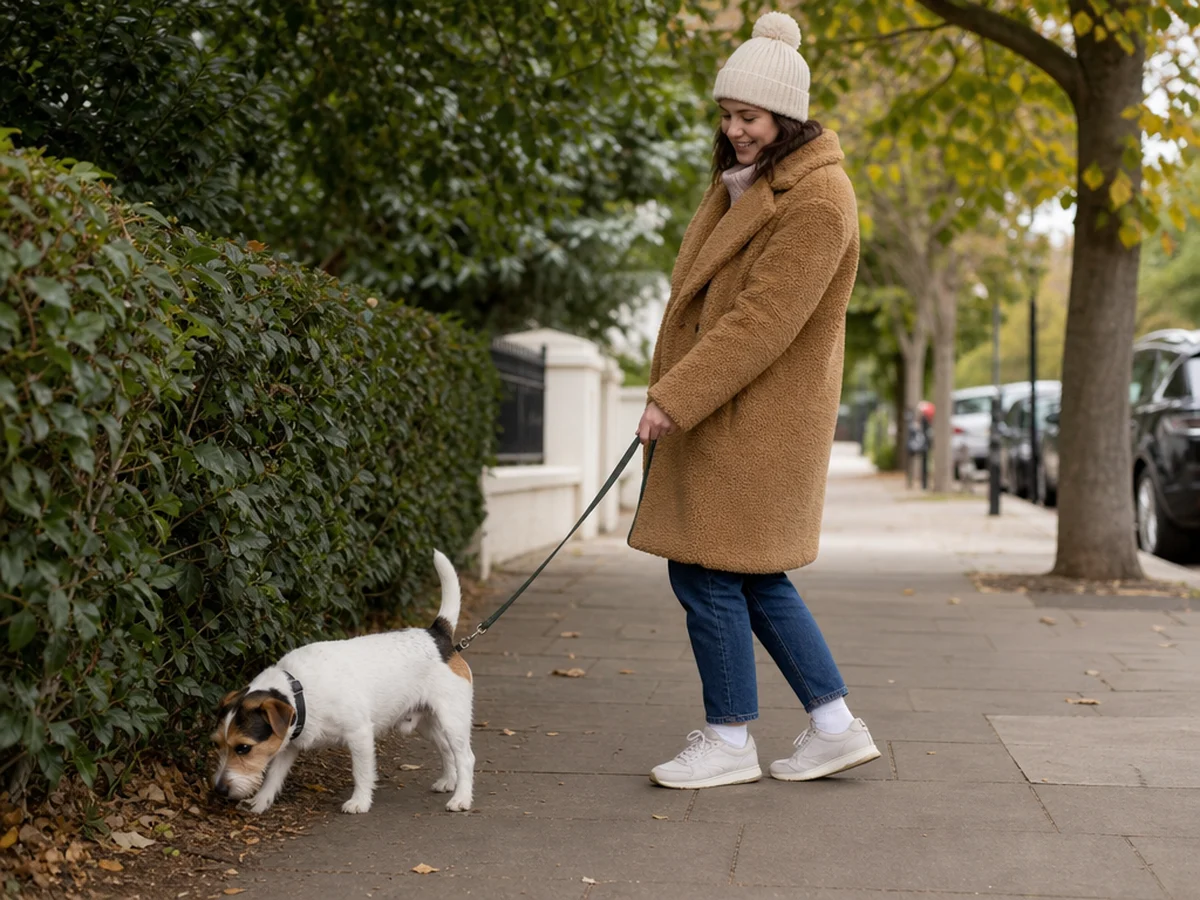
Add occasional check-ins without calling the dog away from every scent. Mark a voluntary glance, reward near your leg and release them to continue exploring. Access to the environment can be part of the reward when the route remains safe.
Finish the recipe before attention disappears completely. Use a familiar turn, walk a predictable route home and offer water. If the dog returns more frantic than they left, choose a quieter location or reduce the outing's difficulty next time.
A Shared-Movement Exercise Recipe
Shared movement means the dog and person notice one another while walking, playing or changing direction. Begin where the Jack Russell Terrier can respond to a name or hand target. Reward connection, then resume movement so attention does not always make the activity stop.
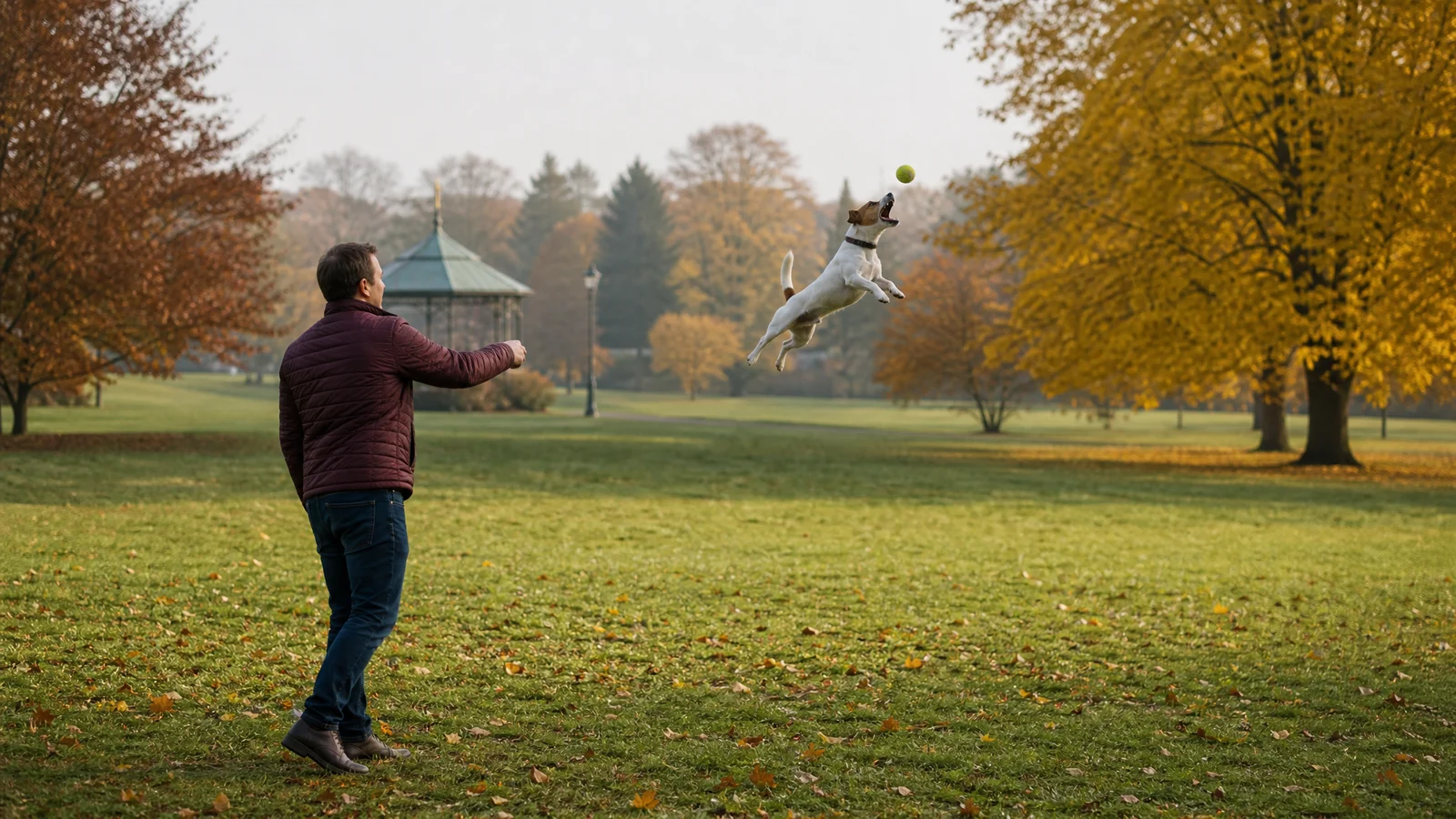
Use broad turns and secure footing. A toy exchange can add short bursts of movement if the dog releases comfortably and can pause between repetitions. Keep hands away from fast grabbing and end the game if arousal replaces thoughtful participation.
For more structured outlets, compare Jack Russell sports. The daily recipe should remain easier than a formal activity lesson. Its job is to make communication part of motion, not to rehearse a complete sport in the yard or living room.
A Search Brain Game for a Jack Russell Terrier
Start with several pieces of food visible on a clear floor. Release the dog to find them, then place the next pieces partly behind safe objects. The progression is from obvious to slightly hidden, not from easy to impossible.
ASPCA enrichment guidance notes that dogs need opportunities to smell, play, chew and scavenge. A simple search provides one of those outlets without requiring a complicated product. It also lets you control the search area and difficulty.
Watch how the dog solves the problem. Methodical sniffing and returning to the search are useful signs, while hard pawing, barking or abandoning the area suggest the setup became too difficult. Move a hidden piece into view and let the dog finish successfully.
- Use food from the dog's regular meal when that fits their feeding plan.
- Remove unsafe objects and block gaps where the dog could become stuck.
- Keep every hiding place accessible without climbing or forceful digging.
- End with an easy find, then clear the area before ordinary room access resumes.
Food Puzzle Brain Games in an Exercise Plan
A food puzzle should teach an understandable action. Begin with loose food in an open device or folded material the dog can move easily. Add a lid, flap or tighter fold only after the current action is fluent and relaxed.
Supervise new materials and remove anything damaged. Difficulty does not improve a brain game when food is unreachable. If the dog switches from sniffing and nudging to forceful biting, open the puzzle, reward a calmer action and simplify the next setup.
Count puzzle food within the dog's normal diet and discuss feeding or body-condition concerns during regular veterinary visits. A puzzle changes how food is delivered, not how much the dog needs. Water should remain available after active work.
| Dog's response | Recipe adjustment |
|---|---|
| Quick success, then calm | Repeat once before adding difficulty |
| Looks to you for help | Demonstrate one easy movement |
| Grabs or shakes the item | Open it and simplify the action |
| Walks away | End the session without pressure |
Cue Games Between Exercise Activities
Cue work fits best at natural transitions. Use a hand target as the yard door approaches, ask for a brief wait before placing a search or practice a mat behavior after the walk. The cue immediately helps the dog understand what happens next.
Reward generously while the response is being learned. AVSAB's position statement states that training and behavior plans should rely on rewards. That approach lets structure come from predictable consequences instead of intimidation or pain.
Avoid turning every part of exercise into an obedience test. Free sniffing and comfortable movement have value. Use cues where communication or safety benefits, then release the dog so the activity can continue.
Build the cue game around one transition rather than scattering commands across the whole outing. A target can guide the dog through a narrow gate, while a mat can organize the return home. The cue then predicts a useful next step instead of becoming background noise.
If a known cue falls apart in a new place, lower the environmental difficulty. Move farther from activity, use a higher-value reward or practice an easier response. The dog is showing that the recipe changed, not proving that they are unwilling to learn.
Jack Russell Terrier Object Games Without Chaos
Choose one toy that the dog can hold comfortably and one clear action, such as touching, picking up or trading. Reward the action before speed builds. A short, cooperative exchange is more useful than encouraging repeated leaps or collisions with furniture.
Teach the trade by presenting food near the dog's nose, marking the release and returning the toy after the reward. Giving the object back prevents the release cue from always ending play. If possession becomes tense, stop and consult a qualified reward-based professional.
Object games can also be quiet. Ask the dog to identify one familiar toy among two ordinary items, or carry it to a mat. Break the chain into small pieces so each decision is clear and rewardable.
Change the object only after the action is reliable. A different texture or shape already creates a new question for the dog. Keep the route and release cue familiar, which lets the Jack Russell Terrier solve one new feature without losing the rest of the recipe.
- Clear enough space for the chosen action and provide secure footing.
- Use an object large enough to handle without accidental swallowing.
- Pause after each success so arousal does not set the next repetition.
- Put the object away while the dog is still able to disengage calmly.
Recovery Balances the Exercise Recipe
Recovery is not dead time after the real activity. It is the part that tells you whether the recipe suited the dog. Offer water, move to a comfortable area and watch for the ability to breathe normally, shift attention and rest.
Use a repeatable closing sequence after several kinds of activity. Put equipment away, offer a simple floor-level search and guide the dog toward a familiar resting place. A known ending makes it easier to compare how different recipes affected recovery.
A dog who paces, grabs at clothing or demands another round may be carrying arousal rather than unused energy. Choose an easier transition such as scattered food, a familiar mat or quiet sniffing. Do not answer every restless moment with faster activity.
Sudden reluctance, uneven movement, discomfort, unusual fatigue or a major change in recovery calls for veterinary guidance. Keep regular vet visits part of the overall plan. Exercise should support the individual dog's well-being, not make them meet a template.
Sort Two Weeks of Exercise Recipes
During the first week, choose one movement recipe and one brain game each day, then note the recovery. Use plain observations such as “searched steadily,” “lost focus near traffic” or “rested after the mat.” Avoid turning the log into a competition over duration or distance.
In the second week, change one ingredient at a time. You might keep the sniffing route but replace the food puzzle with cue work, or keep the search familiar and choose shared movement outside. A single change makes the dog's response easier to interpret.
At the end of two weeks, keep the recipes that produced voluntary engagement and an ordinary return to rest. Simplify or replace those that repeatedly created confusion or frantic behavior. The finished deck is not fixed forever, because weather, health and experience will change what fits.
If hiking is one of the successful movement recipes, use the Jack Russell Terrier recall guide to prepare the trail skills separately. The recipe deck can then schedule that activity without pretending a brain game alone has prepared the dog for a new environment.
A useful exercise plan does more than tire a Jack Russell Terrier. It gives movement a purpose, makes thinking rewarding and includes a practiced finish. Select from the deck with the dog in front of you, and the day can remain varied without becoming random or endlessly intense.
 Exercise and jobsApartment Living With a Jack Russell Terrier: A Daily Routine
 BehaviorJack Russell Terrier Jumping High: Fences and Counters
 Exercise and jobsPutting a Jack Russell Terrier's Jumping to Work in Agility