 Jack Russell
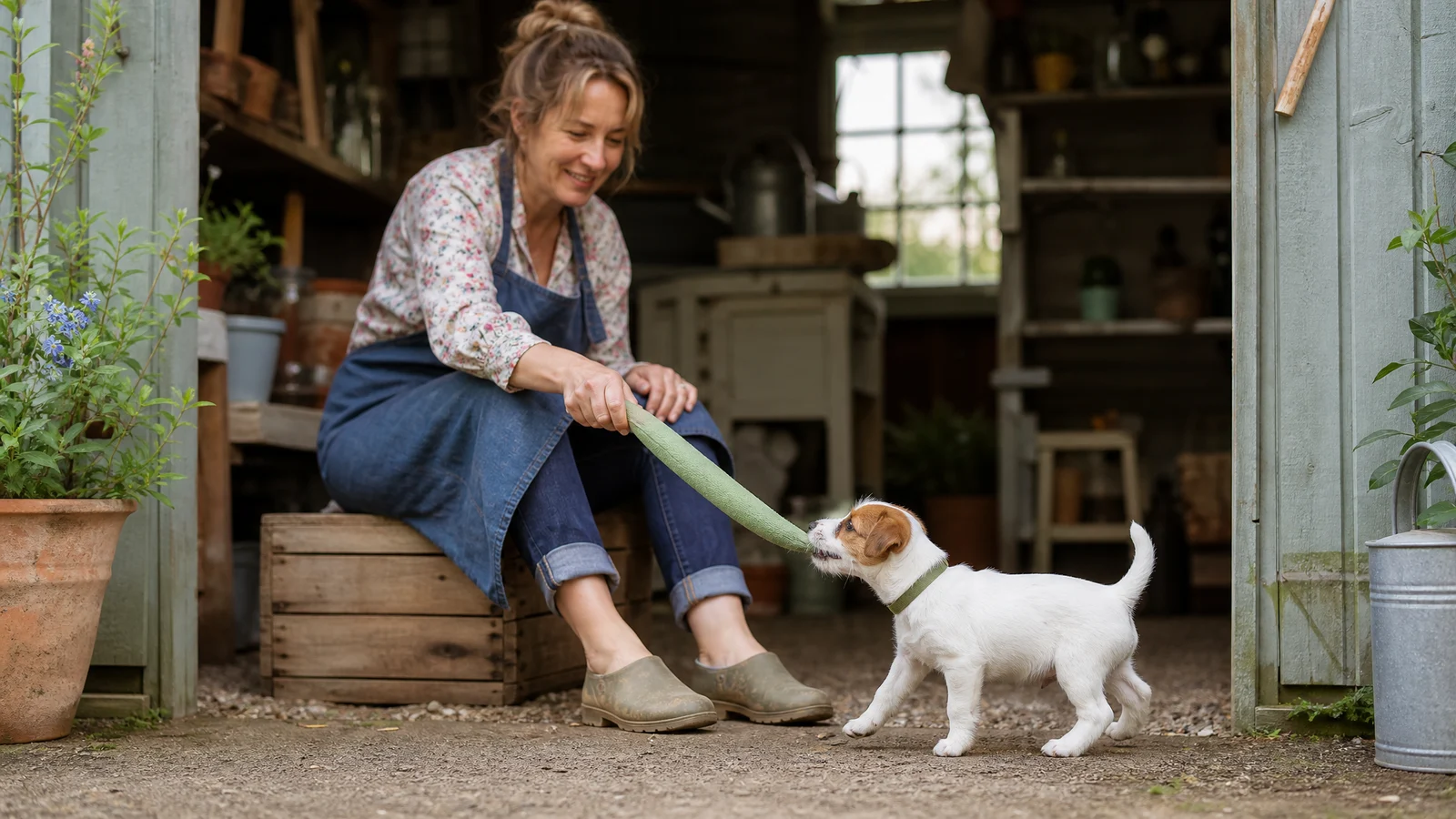
A puppy grabs a sleeve, releases for a toy and keeps a loose wiggly body. Minutes later, the same game produces harder contact, frantic jumping and repeated grabs at hands. The useful question is not whether every mouth touch is bad. It is whether contact is becoming faster, harder and more difficult to interrupt.
Below, we move play through six visible phases instead of one response sequence. We read contact, define the three colors, arrange a green-zone game, interrupt yellow contact by body target, end red contact safely, and give the household one response card. Professional help remains a separate final threshold rather than another training step. The phases also separate ordinary mouthing from contact that needs veterinary or behavior input.
Read Jack Russell Terrier Puppy Training Contact Signals
Puppies explore and play with their mouths. Contact often increases during teething, excitement, frustration, fatigue or handling that feels uncomfortable. Battersea notes that overstimulation and tiredness commonly increase mouthing. Context is more useful than assuming a puppy is trying to control the household.
Watch the whole body. Green play includes curved movement, pauses, easy toy exchanges and the ability to follow food away. Yellow signs include a closing mouth before a grab, faster repetitions, jumping at clothing and ignoring the offered toy. Red signs include painful repeated contact, inability to pause or contact that creates immediate safety risk.
Record what happened in the previous five minutes. Visitors, running children, a long play session, hunger, a missed nap or an exciting outdoor return can change the picture. The same puppy may remain green in the morning and reach yellow quickly late in the day.
Keep regular veterinary visits current. Ask the veterinarian about sudden sensitivity, pain during handling, broken teeth, bleeding, unusual chewing or a sharp change in contact. A behavior plan should not hide a medical issue.
Green Yellow and Red Puppy Training Rules
The household should agree on actions before play starts. The table makes the response depend on observable contact, not the adult's mood. Use it as a refrigerator card and adjust details for the home.
- Green
- What people see: Loose body, gentle mouth, releases toy. Person's response: Continue brief non-contact play. What happens next: Pause while play is still easy.
- Yellow
- What people see: Faster grabs, clothing interest, fewer pauses. Person's response: Freeze the game and scatter food away. What happens next: Switch to sniffing, chewing or rest.
- Red
- What people see: Painful repeated contact or unsafe intensity. Person's response: Step behind a barrier without drama. What happens next: Allow a quiet reset and review the setup.
The ASPCA recommends a brief withdrawal of attention after painful puppy mouthing, followed by another chance to play. The contrast should be immediate: soft contact keeps access to the person, while painful contact makes the person briefly unavailable. Keep the pause neutral.
Do not shout, hold the muzzle or wrestle the puppy onto the floor. AVSAB's training statement supports reward-based teaching. Clear structure means controlling access and reinforcing safe contact, not creating fear.
Arrange a Green Zone for Jack Russell Terrier Puppy Training
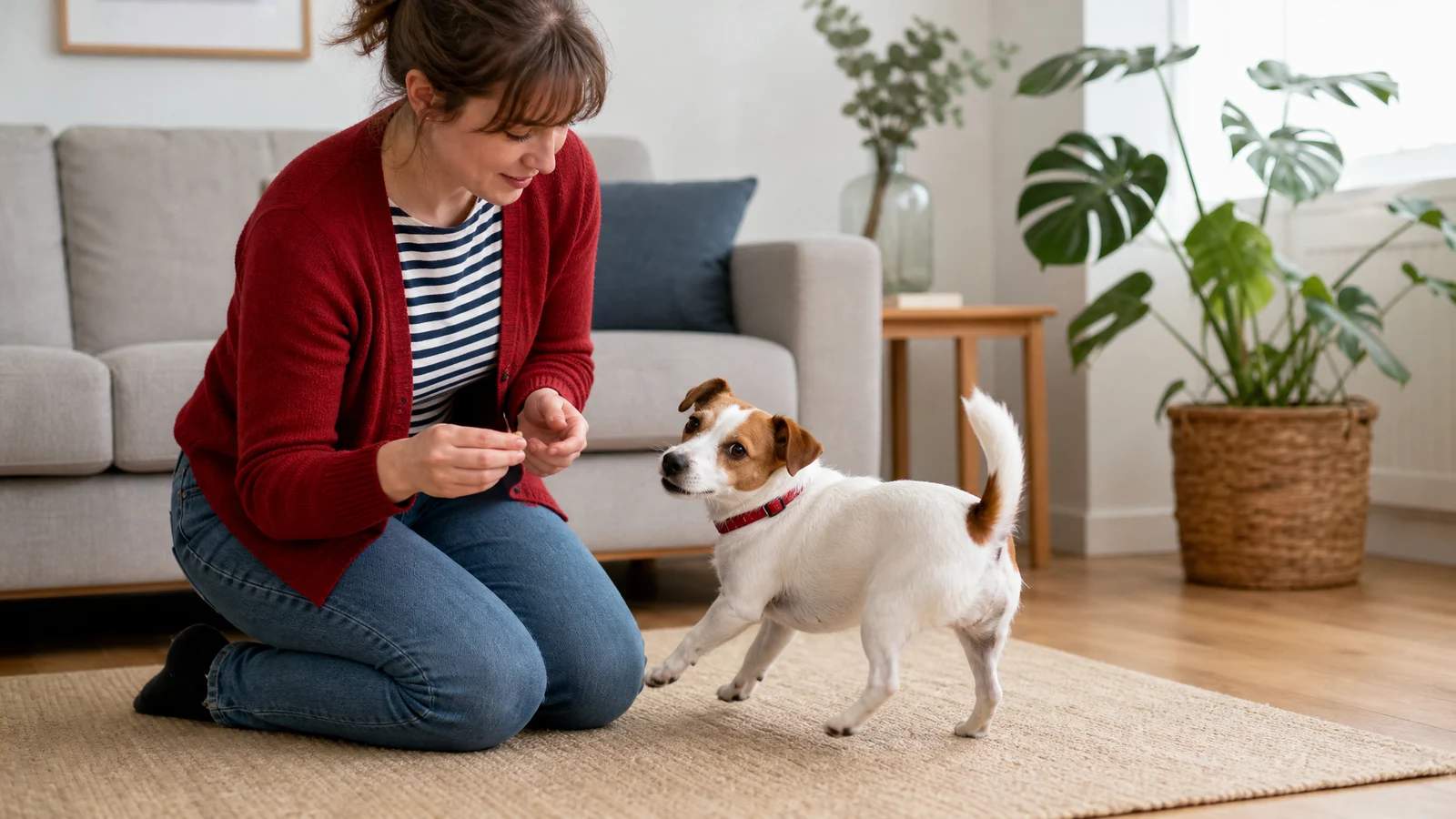
Choose games that place an object between teeth and skin. Roll food for a short chase, use a long soft toy for tug or practice finding treats in a towel that the puppy cannot shred. Inspect toys before and after every session.
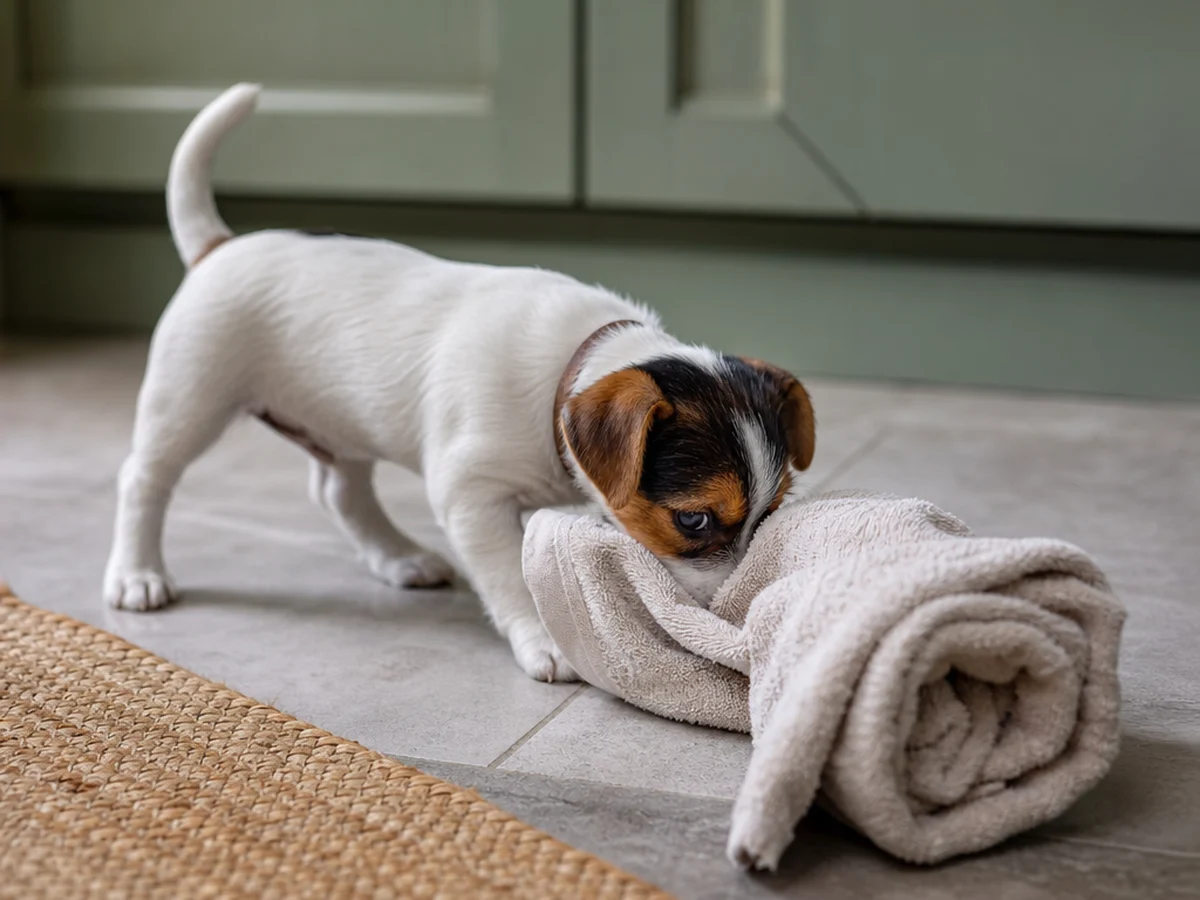
Begin with a calm start cue and end after a few easy repetitions. Ask for a release by holding the toy still and offering food near the puppy's nose. Mark the release, feed and either resume or put the toy away. Do not pry the mouth open.
The UKC describes the Jack Russell Terrier as active, alert and bold. Fast movement can be highly engaging, so keep hands predictable. Avoid fluttering fingers, pushing the face away or running while the puppy hangs on clothing.
Green-Zone Room Setup
Schedule naps and quiet chewing before the household's busiest periods. A comfortable pen or gated area can hold a bed, water and a safe chew while people cook, help children or greet visitors.
Place toys where interaction usually starts. A toy in a distant cupboard cannot help when the puppy approaches a moving trouser leg. Keep supervised options near the sofa, doorway and yard entrance, then rotate them so interest remains useful.
Watch the first thirty seconds of play. If the puppy immediately targets skin, the chosen toy may be too short, too still or too close to the person's body. Change the equipment or game geometry before repeating. A longer toy and slower path can create a clearer target.
Add a deliberate cool-down cue while the puppy remains green. Say the cue, place several pieces of food on a mat and sit quietly. Practicing the transition before biting starts gives the cue a history of calm success instead of using it only during difficult moments.
Interrupt Yellow-Zone Jack Russell Terrier Puppy Training
At the first increase in speed or pressure, make hands and feet still. Say a neutral marker such as "pause," then toss several food pieces onto clear floor away from the body. Sniffing creates space and gives the adult time to choose the next activity.
If food makes the puppy more frantic, use a barrier instead. Step through a gate, close it calmly and wait for softer movement. Return only when the adult can provide a lower-energy option. Repeated immediate returns can restart the same sequence.
Measure recovery with three observations: the puppy can take food gently, keep four paws on the floor and choose a chew or rest. A quiet puppy who is still staring at moving clothing may need more time and space before interaction resumes.
Hands During Handling
Break grooming and body care into tiny steps. Touch a shoulder, feed and remove the hand. Stop before the puppy mouths. If handling triggers contact repeatedly, ask the veterinarian to rule out pain and get reward-based cooperative-care help.
Feet and Moving Clothing
Stop walking instead of dragging the puppy. Scatter food behind the puppy, step away and use a gate if needed. Later, rehearse one slow step while the puppy eats from the floor, then pause. Build movement gradually.
Faces and Lap Play
Keep the puppy off laps during high arousal. Sit beside a barrier or offer a chew on a mat. Adults should not put faces close to a puppy's face, and children should never lie on the floor during active play.
The Jack Russell Terrier Club of America notes that these dogs need sustained activity and engagement. Useful outlets support the week, but a tired puppy can mouth harder. More excitement is not always the answer to yellow contact.
End Red-Zone Jack Russell Terrier Puppy Biting
If contact is painful and repeated, protect skin first. Place a cushion or folded blanket between the puppy and a person's legs without pushing into the puppy. Move behind a nearby barrier. Do not pull clothing rapidly because movement can intensify grabbing.
Give the puppy a quiet period with water and a safe rest option. Check for unmet needs such as elimination, hunger, temperature or sleep. Do not immediately begin another fast game to prove the puppy has calmed down.
After the reset, review the earliest yellow sign. The teaching opportunity was likely thirty seconds earlier, when speed increased or the puppy stopped releasing. Change the next setup by shortening play, adding a scheduled nap or moving behind a gate sooner.
If skin is broken, wash the injury and seek appropriate medical advice. Separate the puppy from the injured person while adults review safety. Repeated bites that break skin deserve professional assessment rather than escalating household experiments.
Build an incident note after everyone is safe. Record the body target, activity, time since sleep and the earliest color an adult noticed. Do not rely on the final bite alone. The earlier transition is the part the household can redesign next time.
The site's Jack Russell puppy training timeline can help coordinate sleep, handling and foundation skills. This traffic-light plan remains specific to contact and recovery.
Use One Jack Russell Terrier Puppy Training Card
Consistency means the same contact produces the same safe outcome. It does not mean every person must play. Children, older adults and visitors can remain outside the puppy area while an adult manages interaction.
- Green: play through a toy and pause early.
- Yellow: become still, create distance and choose sniffing or rest.
- Red: use a barrier, check injury and end the session.
- Never chase the puppy for an object or pull clothing from the mouth.
- Record the time, trigger, earliest color and recovery.
Post the card near the main gate. Adults should rehearse moving through the barrier without the puppy present. A safety response becomes reliable when people know where to step and what item to pick up.
Track color, not just bites. Several days with more green pauses and fewer yellow escalations show progress even before mouthing disappears. Note which activities produced soft contact and which times of day shortened the puppy's tolerance.
Review the card weekly and retire directions nobody can follow. If the planned food scatter is never within reach, move a sealed treat container to the gate. If the exit path is blocked by furniture, change the room. The safety system must work at real speed.
Keep a spare copy with the puppy's travel supplies. The same color language can then follow the puppy to a sitter or family visit without expecting another adult to memorize a long explanation.
Expand access slowly. A puppy who plays gently with one seated adult is not ready for three running children. Add one feature at a time, keep sessions short and return to the easier picture after any red event.
Get Help for Jack Russell Terrier Puppy Biting
Consult a veterinarian and a credentialed trainer working through rewards when contact is sudden, severe, linked to handling, guarded objects or repeated skin-breaking bites. Share the color log, sleep schedule and videos captured safely from a distance.
Seek help early if anyone in the home is afraid or cannot use the barrier plan. Management must fit the actual household. A professional can redesign rooms and play without requiring vulnerable family members to practice risky interactions.
Today, choose one gate, place one toy nearby and write the three colors on a card. Gentle contact grows from early pauses, safe games and predictable exits. The puppy learns that people remain available when play stays soft and that intense contact calmly ends the opportunity.
 Puppy trainingYour 4 Month Old Jack Russell Terrier Starts Testing Every Rule
 Training basicsIs Your Jack Russell Terrier Stubborn or Just Too Clever?
 Exercise and jobsHiking With a Jack Russell Terrier: Trail Manners and Recall