 Jack Russell
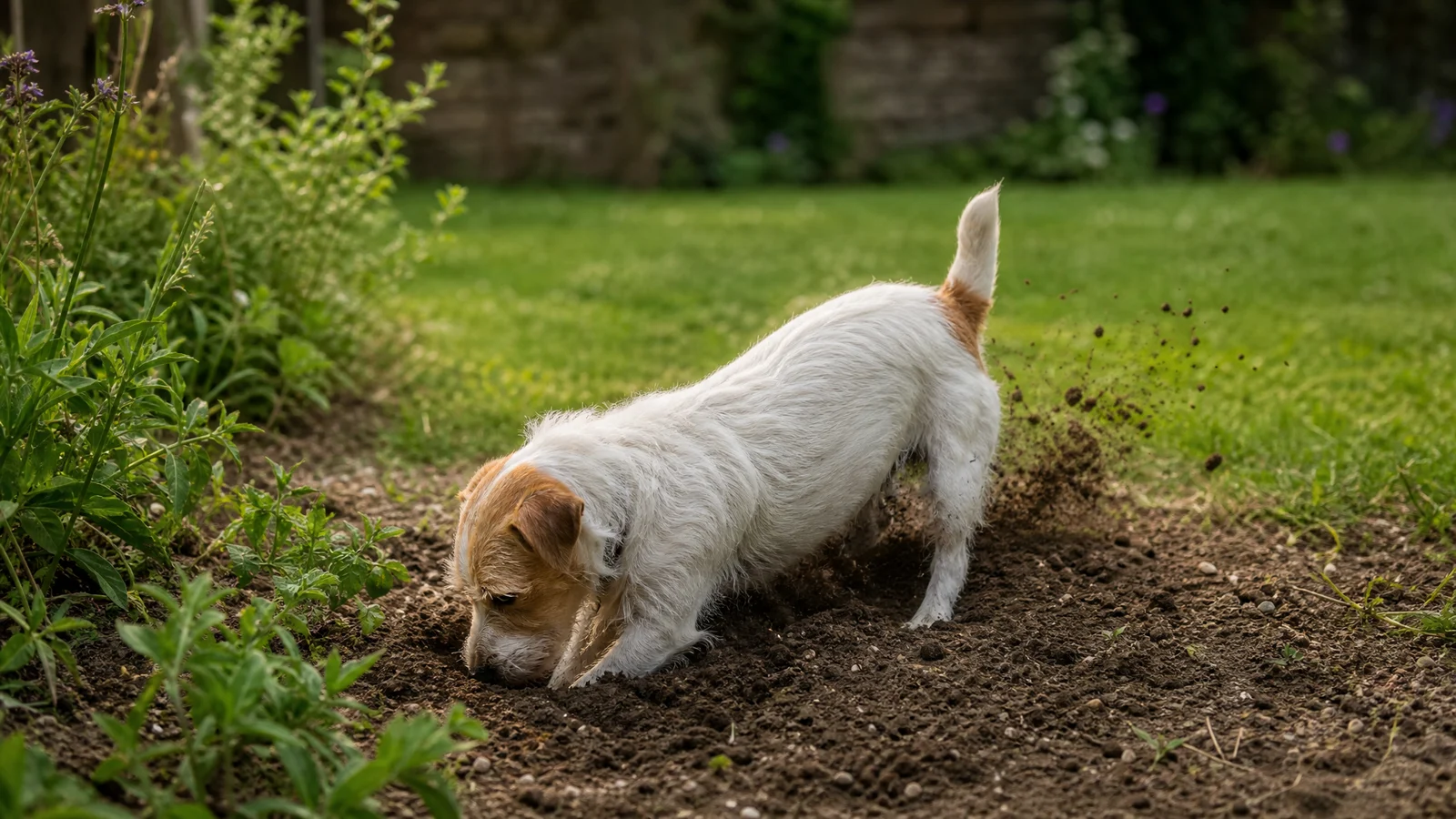
Some Jack Russell Terrier owners have a yard where the dog clears mice and rats from along the shed with obvious relish, and the lawn looks like it lost a fight with a backhoe. Others live with a Jack who has none of that killer instinct and never touches the grass.
Same breed, very different dirt. The gap is rarely about discipline. It comes down to how strong the individual dog's prey drive is, what actually lives in the yard, and whether the instinct has anywhere legal to go.
Handled badly, digging spreads to flower beds, foundations and fence lines. Handled well, the same instinct gives you a busy, contented terrier with a favorite patch of dirt. This article looks at digging as one of the behavior problems this breed is known for, so you can read what the holes mean, build a dig spot your dog may use, and teach them to use it step by step with treats and praise.
A Jack Russell Terrier Built to Go to Ground
Start with the job, because the job explains the dog. The UKC describes the breed as a small, agile, active hunting terrier built to go to ground, and adds that these dogs need "little encouragement to go to ground." The original work was to follow a fox underground after the hounds had driven it there, then bolt it so the chase could continue.
Digging toward a scent is not a flaw from poor upbringing. It is the working method, and it has been bred in for a long time.
The body fits the task. A working-terrier standard asks for a ready attitude and medium size and bone suggesting strength and endurance, and the Jack Russell standard allows the full range of sizes that earth work demands. A dog made to squeeze underground and keep going will read soft yard soil as an invitation.
Does that mean every hole is about prey? Often, yes. Many Jacks clear rats, mice and other small animals from yards and neighboring coop areas, usually with obvious enthusiasm, and some range wider to rabbits, lizards and possums. Expect small wildlife to count as a target in any yard. Prey drive varies from dog to dog, so plan around the dog you actually have.
How Terrier Instinct Turns Into Behavior Problems
Instinct alone does not dig a crater. The chain runs like this: a scent or sound under the ground grabs the dog's attention, a few scratches release more smell, and the smell pays them for scratching more. By the time there is a real hole, the digging rewards itself and nobody has handed over a treat. That is why waiting it out so rarely works, and why a yard can go from one patch of loose dirt to many in a single season.
The popular claim that digging is just boredom is half right. Boredom explains why digging increases. It does not explain why digging exists. A Jack with every need met will still investigate a promising patch of earth, because the behavior pays on its own. Verdict: you are managing an instinct, not curing a mood.
When a Target Takes Over
Fixation raises the stakes. A Jack can lock onto a single target, such as a mouse in a gutter pipe, with an intensity that shuts out everything else, and some watch yard birds with serious focus. Once a dog is locked on, calling rarely works, so the practice has to happen earlier.
While your dog is calm and looking at something mildly interesting, say your marker word the moment they glance back at you, then give a treat. Repeat until checking in becomes their own habit. Pair that with yard management. If you know where a target lives, keep your dog from rehearsing at that spot, because every rehearsal turns a one-off hole into a routine. The same logic runs through the instinct behind other problems.
Why Idle Jack Russell Terriers Develop Behavior Problems
Put bluntly, when these dogs lack an outlet for their natural instincts, they invent their own jobs, and the list includes chasing cars, hunting birds, bugs or leaves, and "endlessly digging in the soil." Read that as a diagnosis. Digging is what an unemployed terrier does, so the fix is employment. We have trained this breed for many years, and the tidiest yards belong to terriers who get both a job and an off switch.
Exercise Helps but Does Not Finish the Job
Here is the advice worth doubting: tire them out and the digging stops. Some Jacks stay wound up or cannot settle even with a full schedule of walks, play and puzzle toys, and some owners of puppies find that trying to wear the puppy out simply fails. Exercise matters. It does not replace work for a mind that is clever and under-challenged, and it does not teach a dog how to switch off.
The yard-as-exercise plan earns the same doubt. Turning a Jack loose outside to burn energy is a dependable way to grow craters, because the yard offers soil and scents but no company. Time outside with you in it is a different thing.
Routines That Teach Settling
What helps is rhythm. Predictable exercise times calm a pestering puppy, who learns to relax until the usual hour and to be ready when it arrives. Crate training and calm settle-down routines give some Jacks distinct high and low periods. Some owners use a treadmill for cold mornings, with micro treats at the front to keep the dog focused. A dog who knows when the fun happens digs less in between.
Hunting Digs and Escape Digs as Behavior Problems
Before you build anything, read the holes. Where the digging happens, how the hole is shaped and how your dog acts while digging will tell you which problem you have, and each needs a different answer. A dig spot solves one of them well, helps with another and does almost nothing for the third, so a little detective work now saves weeks of frustration.
- Hunting digs cluster at sheds, foundations, woodpiles, downspouts and the edges of neighboring coop areas. The likely pattern is a hole aimed at one spot, dug by a dog who has fixated on a target there and may be too locked on to notice treats or calls.
- Escape digs run along fence lines and under gates, usually where the dog can see or hear people, dogs or animals on the other side, and the hole often angles under the barrier.
- Boredom digs are shallow and scattered across lawn and flower beds, and they show up when the dog has been left alone outside for a long stretch.
A dig spot will not beat a live mouse under the shed. Hunting digs are handled by removing what draws small animals to the yard, such as spilled seed, loose pet food, compost and woodpiles, and by blocking access to the spot. Escape digs are a fence problem first and a training problem second. Boredom digs are where the dig spot shines.
Keep a realistic view of the yard's residents, too. Some Jacks catch possums, either carrying one to a person or shaking it until it plays dead and the dog loses interest. That is not a victory to celebrate, and it is a good reason to supervise.
The same prey logic reaches indoors. Cats and other small pets are seen as prey by dogs who are first and foremost hunters, and a long peaceful history is no guarantee. A Jack can live calmly with a household cat for years and then go wild at random sightings. A low-drive dog is not a safe bet either, so keep gates and separate spaces in place. Our piece on cats and prey drive goes deeper.
This is general information, not veterinary advice. Regular vet checkups belong in the routine for an active, digging breed, and any cut, bite or sign of illness after a wildlife encounter or a dig is a reason to call your veterinarian. Check with them before changing your dog's diet, treats or any medication.
A Legal Dig Spot That Solves Yard Behavior Problems
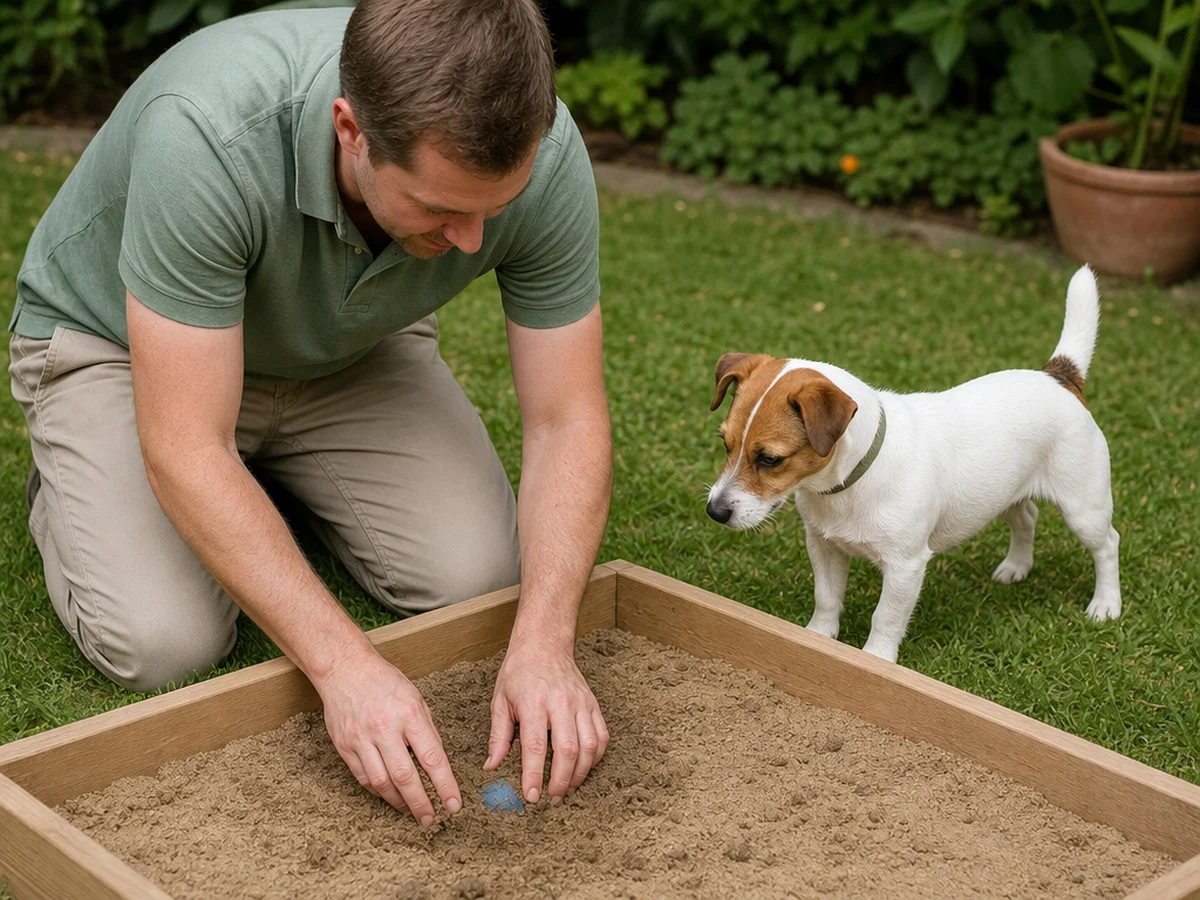
A dig spot works because it offers an approved version of what the instinct wants: loose earth, a payoff for effort and no objection from you. The goal is not to wear your dog out. The goal is to make the box the best digging in the yard, softer and deeper than the lawn and more rewarding than a flower bed.
Will a box simply teach a dog to dig more? The urge is already there and you cannot ban a working instinct, so the useful question is where it happens. Hiding treats in the loose soil makes the box more appealing, because digging there pays off right away.
- Choose a partly shaded spot in sight of the house, close to where the favorite holes have been appearing, so the box slots into habits already in place.
- Build a sturdy frame from untreated lumber or edging stones, big enough for your dog to turn around inside and low enough to step over easily.
- Fill it with clean play sand or loose, pesticide-free soil, deep enough that the dog cannot hit the bottom quickly.
- Mark the border clearly so everyone in the household can see where digging is allowed.
- Cover the box when it is not in use, so rain, neighborhood cats and weeds do not turn it into a mess.
- Keep it away from fence lines, where a successful dig can double as an escape route.
Check the sand or soil regularly and rake it loose, because a packed, soggy box loses its appeal fast. Remove any sharp objects, and refresh the fill when it gets dirty. A box that stays loose and interesting keeps beating the lawn.
Teaching Your Jack Russell Terrier the Dig Spot
The reward schedule matters more than the box. Because digging pays for itself, you are not creating the urge, you are attaching it to a place. Pick a short marker word to say the instant your dog digs in the box, and follow it with a treat and praise. Keep sessions brief and cheerful, and stay with your dog every time at first.
- Scatter treats on the sand so they are barely covered. Let your dog watch you place them, and mark and praise as they nuzzle and scratch.
- Bury treats a little deeper while your dog watches, and mark each scoop of digging before they reach the reward.
- Hide treats while your dog is out of sight so they find the box by scent, then mix in a toy or chew.
- Thin the schedule. Sometimes offer a rich treat, sometimes a small one, sometimes only praise, so the box stays interesting.
- Once your dog heads to the box on their own, add a cue word and say it as you walk out together.
When your dog digs elsewhere, calmly interrupt, lead them to the box and reward the first scoop there. A treat for choosing the box unprompted is the strongest lesson you can give. Agree on one marker word and one cue for the whole household, because inconsistency confuses a terrier.
Add scent games away from the box as well. Scatter treats in the grass for a find-it game, hide them in crumpled paper inside a cardboard box, or build a blanket tunnel for your dog to wriggle through. Organized outlets exist too, and the related Parson Russell Terrier club lists many activities including Earthdog and Barnhunt. For running and jumping, see Jack Russell agility and racing jobs.
Should You Fill Your Jack Russell Terrier's Old Holes?
Yes, mostly. Open holes with loose dirt carry the smell of the last dig, and a terrier who finds a half-finished project will simply carry on. Fill each hole, firm it down, and reseed or cover it. Filling does not stop digging by itself. It removes the invitation while the box takes over.
Fence Lines and Foundations
For escape digs, strengthen the base of the fence rather than hoping training will cover the gap. Lay paving stones or a buried wire apron along the bottom, extending outward, or set the fence on a solid footer. Close gaps under sheds and decks too, so hunting digs have nowhere to start. Keep your dog away from the fence line while neighbors' dogs or animals are in view.
When Your Dog Digs Elsewhere
One popular piece of advice says to ignore unwanted behavior. That suits attention-seeking, but digging is self-rewarding, so ignoring it just leaves your dog to enjoy themselves. Management has to carry the weight. Stay in the yard, calmly interrupt, redirect to the box, reward there, and temporarily fence off any bed that keeps drawing them. Until the box habit is solid, no unsupervised yard time.
Give Digging Behavior Problems a Place to Go Today
A terrier built to go to ground, with no outlet, will invent a job, and digging is the job closest to the original. You will not argue the breed out of it. You can give the instinct a place, an audience and a payoff, then manage the rest of the yard so the wrong holes stop paying. Drive varies from dog to dog, so judge the one in front of you and keep fences and gates in place whatever their history.
Today, mark out a small patch of loose earth, even before you build the full box. Bury a few treats in it, bring your dog over, and let them find them. Praise the first scratch.
 BehaviorJack Russell Terrier and Cats: What Training Can and Can't Do
 Exercise and jobsRainy Day Jobs for a High-Energy Jack Russell Terrier
 CareGetting a Wirehaired Jack Russell Terrier Used to Grooming